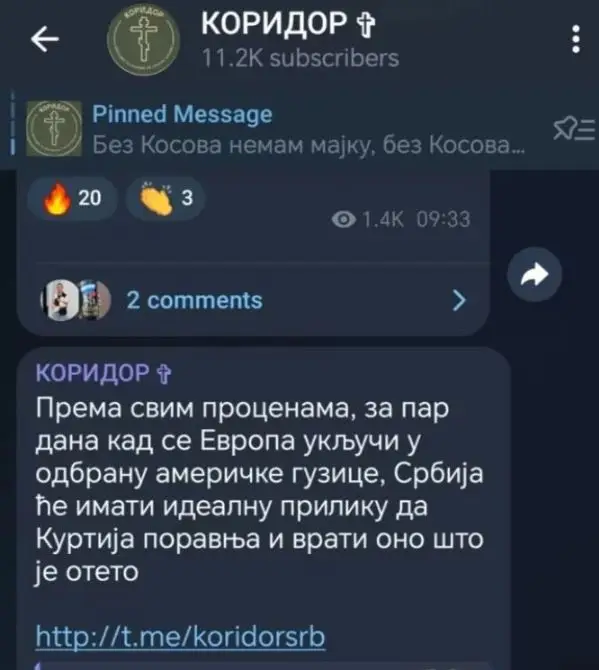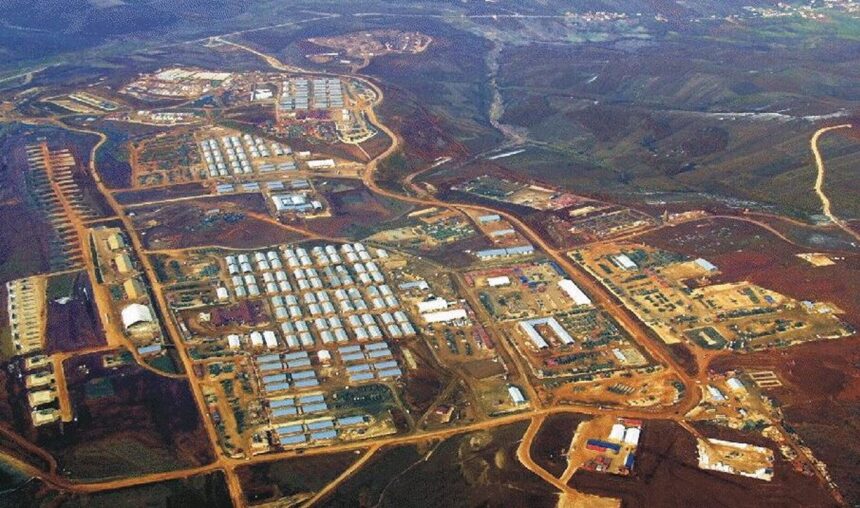
After the United States and Israel launched strikes against Iran on February 28, comments and posts mentioning Camp Bondsteel in Kosovo began circulating on Telegram channels and other social media platforms. Messages such as “Don’t judge it, strike Bondsteel” and posts sharing the base’s coordinates appeared in groups with tens of thousands of followers, mostly Serbian-language and pro-Russian channels.
Camp Bondsteel, located near Ferizaj, is the largest U.S. military base in the Balkans and operates within the framework of NATO through KFOR.
What Is Happening in the Middle East?
On February 28, the U.S. and Israel launched operations targeting key sites in Iran, including military facilities and residences of senior officials. Reports stated that Iran’s Supreme Leader, Ali Khamenei, was killed, along with dozens of other high-ranking Iranian officials.
In response, Iran reportedly launched attacks against U.S. and Western military targets, as well as civilian locations in Israel and the Persian Gulf region. Israel also carried out strikes against Hezbollah positions in Lebanon.
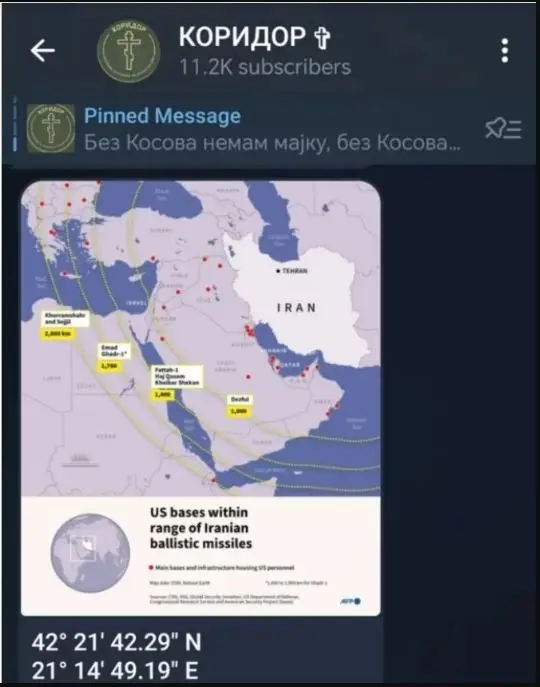
Amid this escalation, certain Telegram channels in Serbia began sharing maps showing the range of Iranian ballistic missiles, highlighting Kosovo, along with Bondsteel’s coordinates and provocative captions.The Role of Pro-Russian Channels and Radical Narratives
Many of these Telegram channels were created after Russia’s invasion of Ukraine in 2022 and are characterized by strongly pro-Russian and anti-Western content. Kosovo is frequently featured in their narratives through:
- Denial of Kosovo’s independence
- Delegitimization of Kosovo’s institutions
- Promotion of radical rhetoric, including calls for military intervention
Beyond Telegram, Bondsteel’s coordinates have also been shared on Facebook and X (formerly Twitter), in groups with tens of thousands of followers.
Does This Represent a Real Threat?
According to security experts, including researchers from the Kosovo Center for Security Studies, these posts do not represent a real military threat. Iran currently does not possess missile systems with sufficient range to target Kosovo or broader parts of Europe.
However, experts emphasize that the impact is primarily psychological and political. The deliberate sharing of coordinates and dramatic framing of messages aims to:
- Create public anxiety
- Reinforce perceptions of instability
- Exploit the Western Balkans’ political sensitivity
They recommend that Kosovo’s institutions, in coordination with KFOR, continue regular vulnerability assessments and consider long-term defensive capacity planning. Kosovo currently does not have its own air defense systems, and while there is no immediate threat, strategic planning remains important.