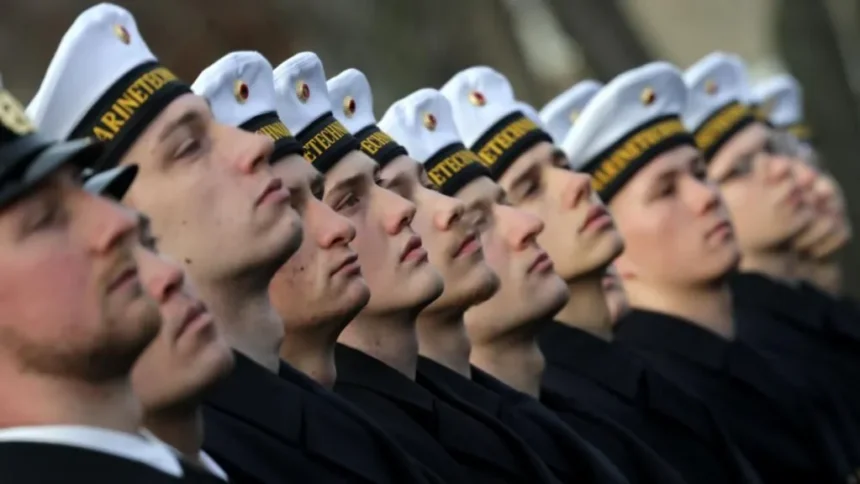
The German Bundestag has voted to introduce a voluntary military service program for 18-year-olds, a major step aimed at strengthening national defense in response to Russia’s full-scale invasion of Ukraine. The decision marks a significant shift in Germany’s approach to its armed forces, aligning with Chancellor Friedrich Merz’s efforts to build the strongest conventional army in Europe.
Under the new program, all 18-year-old males will receive a mandatory questionnaire starting January 2026, inquiring about their interest and willingness to join the armed forces. Participation for females will remain voluntary. The measure is designed to create a flexible pool of potential recruits for future contingencies.
Youth Opposition and Public Debate
The announcement has triggered widespread protests among students, with strikes scheduled in around 90 German cities this Friday. Organizers voiced strong objections on social media:
“We do not want to spend six months of our lives confined in barracks, training in discipline and obedience, and learning to kill. War offers no future and destroys our lives.”
In Hamburg alone, roughly 1,500 participants were expected to join demonstrations. School officials warned parents not to keep students home, highlighting tensions between government policy and public sentiment.
Parliamentary Approval and Future Prospects
The Bundestag approved the reform with 323 votes in favor and 272 against, making Germany the latest European country to implement a revised form of military service. France recently announced a similar 10-month voluntary military training program for 18- and 19-year-olds.
The program remains voluntary for now, but from July 2027, all 18-year-old males will undergo mandatory medical assessments to determine fitness for potential military service. According to Defense Minister Boris Pistorius, universal medical checks are necessary to ensure Germany can rapidly deploy operationally capable personnel in case of an attack.
Currently, the Bundeswehr maintains around 182,000 active personnel, with plans to increase this number by 20,000 over the next year. The long-term target is 260,000 active soldiers, complemented by 200,000 reservists, meeting NATO requirements and enhancing Germany’s national defense.
Financial Incentives and NATO Pressure
Volunteers will receive a monthly salary of approximately €2,600, significantly higher than the French program, which offers a minimum of €800 per month. The program also reflects pressure from the United States and NATO allies, urging Germany to increase defense spending and military readiness.
Political Context
The decision comes amid broader domestic challenges, including a pending pension reform vote designed to maintain state pensions until 2031. The coalition between Merz’s conservatives and the center-left Social Democrats holds a narrow majority of just 12 votes, leaving the government vulnerable to dissent within its own ranks.
Despite threats of rebellion from younger conservative members who argue the plan is financially unsustainable, the bill is expected to pass, as the left-wing opposition party Die Linke has pledged to abstain.
Germany’s reintroduction of voluntary military service underscores the country’s response to heightened security threats in Europe and signals a commitment to reinforce both national defense and NATO capabilities.