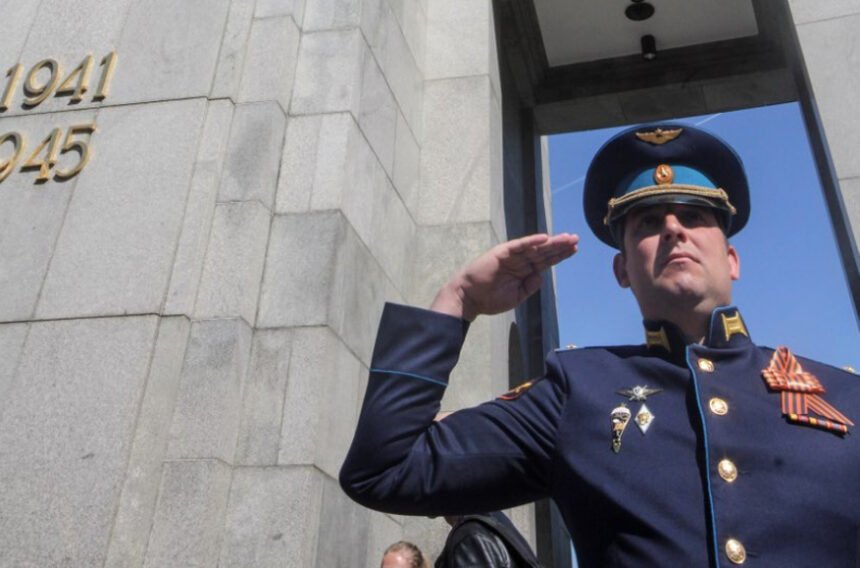
Germany has expelled Andrei Mayorov, Russia’s deputy military attaché, on accusations of espionage, following revelations that he oversaw a GRU-linked spy network operating inside the country, according to investigations by The Insider and Der Spiegel.
Mayorov, who officially served as a diplomat, was identified as the handler of Ilona Kopylova-Wiener, a woman holding Russian, Ukrainian, and German citizenship, who was arrested earlier in Berlin on espionage charges.
GRU Colonel Operating Under Diplomatic Cover
Despite his diplomatic title, Mayorov reportedly held the rank of colonel within Russia’s GRU military intelligence service. German authorities were likely aware of his intelligence background, as Russian military attaché positions are traditionally staffed by GRU officers.
Investigative data indicate that Mayorov previously served as a paratrooper from Russia’s Pskov region and later worked at the GRU’s 162nd Center for Military-Technical Information, a unit associated with intelligence gathering and military technology.
Suspect Maintained High-Level German Contacts
Ilona Kopylova-Wiener, 56, was born in Dnipro, Ukraine, and ran a consulting firm in Germany under the name Wiener & Partner. Described as a well-connected networker, she maintained frequent contact with senior German business figures and politicians.
Photographic evidence reportedly shows Wiener alongside senior lawmakers from Germany’s leading political parties and standing behind Friedrich Merz during a meeting with Ukrainian President Volodymyr Zelensky.
NATO Conference and Nuclear Base Linked to Probe
German investigators allege that Wiener regularly passed collected information to Russian intelligence, including details related to participants at a NATO conference held in 2023 at Berlin’s Hotel Adlon. Authorities also believe she may have brought Mayorov to sensitive events using a false identity.
As part of her suspected recruitment efforts, Wiener established contact with Walter Storz, a former head of the German Air Force’s 61st Test and Evaluation Center, as well as a retired Air Force officer identified as Uwe V., who previously served at Büchel Air Base.
The base is considered one of Germany’s most sensitive military installations, as it stores U.S. nuclear bombs assigned to the German Air Force. While searches were conducted at the men’s residences and their mobile phones were seized, neither individual has been detained, and investigators say it remains unclear whether classified information was obtained.
Espionage Tensions Escalate
The expulsion of Mayorov underscores Germany’s heightened counter-intelligence posture amid growing concerns over Russian espionage activities in Europe, particularly those targeting NATO, defense infrastructure, and political networks.