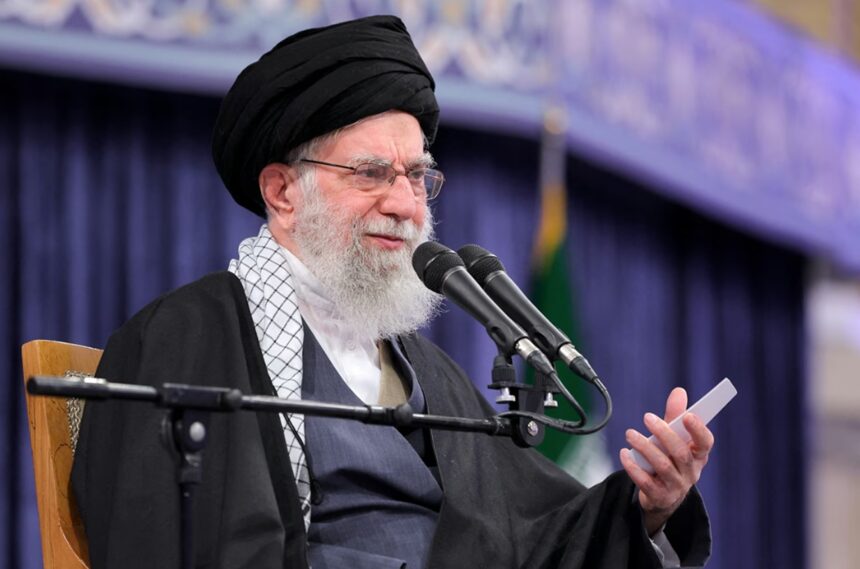
In an atmosphere of friendship within the Non-Aligned Movement, Belgrade welcomed the then-President of the Islamic Republic of Iran, Ali Khamenei, in February 1989. During a press conference at Dedinje, Khamenei issued a pointed warning to author Salman Rushdie regarding his novel The Satanic Verses, which had been banned in Iran the previous year:
“The arrow has been released, it is very carefully aimed, and it is on its way to the target,” Khamenei stated.
Khamenei also expressed hope that a just and lasting peace would be established in the Persian Gulf, six months after the end of the eight-year Iran-Iraq war. Yugoslavia, as one of the founders of the Non-Aligned Movement, played a significant role in supporting peace in the region. However, nearly four decades later, this part of the world remains far from stable. Recently, the United States and Israel bombed Tehran, killing over 40 high-ranking Iranian officials, including Supreme Leader Ali Khamenei.
A similar atmosphere of global tension existed in 1989. At a time when the international order was shifting, Yugoslavia and Iran sought to uphold principles of independence and cooperation among developing countries, according to RTS.
Several months later, in June 1989, Khamenei was elected Supreme Leader of Iran, making his Belgrade visit his last to Europe.
During his stay in Belgrade, Khamenei met with Raif Dizdarević, President of the Presidency of the SFR Yugoslavia. In a joint statement, both leaders emphasized that discussions were held “in a warm atmosphere of friendship and mutual understanding, characterizing relations between two Non-Aligned countries.”
The talks covered the positive development of bilateral relations, political dialogue, and intentions to strengthen cooperation across all areas, particularly economic cooperation, science, education, culture, and media.
International issues were also addressed, from preparations for the Ninth Non-Aligned Summit to situations in the Middle East, Afghanistan, and South Africa. Another significant topic was the convention prohibiting the development, production, and use of chemical weapons.
The Yugoslav side welcomed Iran’s acceptance of UN Security Council Resolution 598, ending the war with Iraq, expressing hope that this would lay the foundation for lasting peace in the region.
“The Arrow Has Been Released”
Khamenei concluded his visit to Belgrade with a press conference at the Dedinje Palace, where the focus was on Salman Rushdie and The Satanic Verses.
“I think this case has no solution. The arrow has been released. It is very carefully aimed and is on its way to its goal. Therefore, arrogant people should learn what can happen if they insult and humiliate others,” Khamenei said.
He described the incident as unfortunate and noted that global media had interpreted it differently.
“It is not necessary to read the book word for word to understand that it contains insults,” Khamenei added, emphasizing that Iran did not intend to export the Islamic Revolution and that Islam, in its authentic interpretation, respects other religions.
The message Khamenei sent to Rushdie from Belgrade became a major topic in international media. The Satanic Verses had been banned in Iran in 1988 because many Muslims considered it blasphemous. Khamenei’s predecessor, Ayatollah Ruhollah Khomeini, had issued a fatwa calling for Rushdie’s death. During Khamenei’s tenure, a semi-official Iranian religious foundation increased the bounty for Rushdie’s assassination from $2.8 million to $3.3 million. In 2022, Rushdie was stabbed, and there have been multiple attempts on translators of his works.
Khamenei’s Belgrade visit was part of a broader diplomatic tour that year, including China and North Korea in May 1989. One month later, he became Supreme Leader and has never left Iran since.
Thus, the visit to Belgrade holds historical significance as Ali Khamenei’s last presence on European soil.