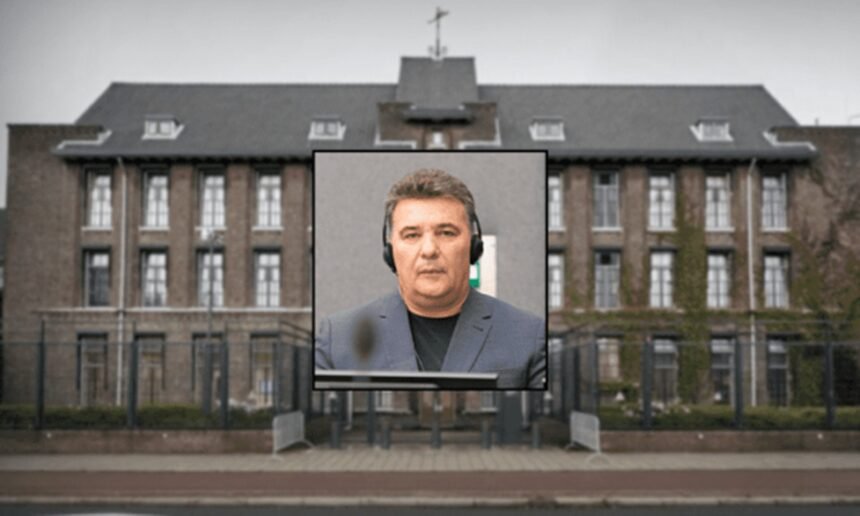
The President of the Kosovo Specialist Chambers (KSC) in The Hague, Ekaterina Trendafilova, has decided to reject the modification of the sentence imposed on Haxhi Shala, who was sentenced to three years in prison for criminal offenses against the administration of justice, despite having served two-thirds of his sentence.
In her decision, the KSC President stated that, according to reports from the detention administrator and the Detention Centre, Shala has not expressed remorse or regret for his actions, nor has he provided any indication that he would refrain from engaging in similar conduct in the future, reports Betimi për Drejtësi.
According to the reports, Shala discussed only general matters with Detention Centre staff and did not engage in conversations regarding his case or the criminal offenses for which he was convicted. However, it was noted that Shala claimed to have expressed regret and remorse through his lawyer during the sentencing hearing.
Trendafilova emphasized that a guilty plea agreement should not be based solely on an expression of remorse or regret, as this was a key element for which Shala had already benefited through a mandatory reduction of his sentence.
The decision further notes that the transcript shows Shala did not personally express remorse during the plea agreement hearing. When asked by the Presiding Judge whether he wished to express remorse, Shala’s Specialized Counsel, after consulting with his client, informed the Judicial Panel that Shala was “not in a position to answer that question.”
Regarding his conduct in detention, Shala was described as friendly, responsible, and respectful toward staff, and as having complied with Detention Centre rules, aside from one redacted incident. No disciplinary measures were imposed, and no further incidents were recorded. He was also noted to have maintained positive relations with other detainees.
The President acknowledged that Shala has strong family ties and a broad social circle that could support his reintegration after release. Nevertheless, considering the nature of the crimes, their intimidating effect on witnesses, and Shala’s lack of meaningful disengagement from the criminal conduct, Trendafilova concluded that modifying his sentence would not be appropriate at this stage.
She added that the seriousness of the offenses—particularly their impact on the administration of justice and witness intimidation—outweighs other considerations. However, the President indicated that the possibility of modifying Shala’s sentence may be reconsidered in two months, following a new report from the detention administrator.
Previously, on 19 February 2025, conditional release was granted to Ismet Bahtijari and Sabit Januzi, who were each sentenced to two years in prison after pleading guilty in the same case.
Shala, Januzi, and Bahtijari admitted guilt for offenses against the administration of justice and witness intimidation under plea agreements reached with the Specialist Prosecutor’s Office shortly before their trial was scheduled to begin in November 2024.