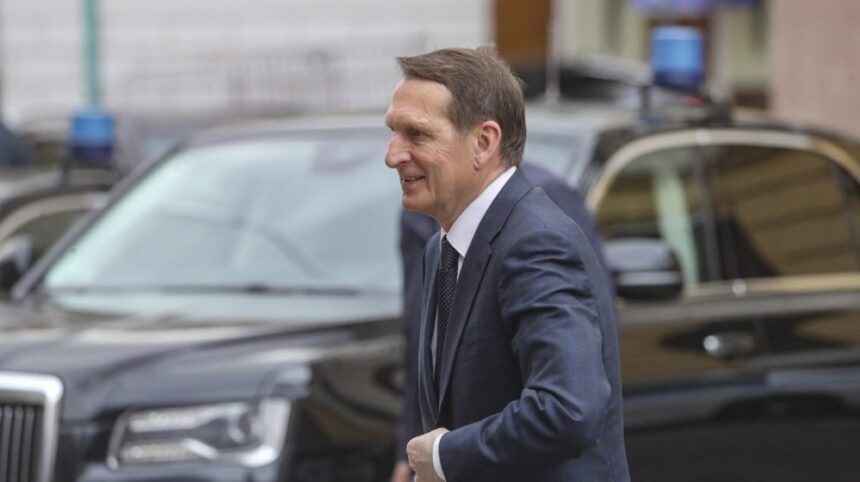
Russia’s Foreign Intelligence Service (SVR) Director Sergei Naryshkin has claimed that Western countries have not abandoned plans to trigger a “Maidan-style” scenario in Serbia, alleging continued pressure on the country’s political leadership.
Speaking in an interview with Russia’s state news agency TASS, Naryshkin said that the focus has now shifted toward exerting political pressure on Serbia’s leadership rather than direct street mobilization.
Claims of Western Pressure on Serbia
“The West is very intensively and energetically urging Serbia’s political leadership to make a so-called ‘civilizational choice’,” Naryshkin said.
According to him, this would mean abandoning friendly relations with Russia, cutting historical and fraternal ties, in exchange for what he described as a promised path toward a “happy” future within the European Union.
SVR Claims Intelligence Warning to Belgrade
Naryshkin confirmed that Russia’s Foreign Intelligence Service provided Serbian authorities with intelligence allegedly indicating preparations by Western intelligence agencies for a ‘Maidan’ in Belgrade.
“Yes, indeed, Russia’s foreign intelligence service handed over relevant intelligence information to our Serbian colleagues, and President Aleksandar Vučić publicly thanked the Russian side for this information,” Naryshkin stated.
He added that Vučić said the intelligence “helped to ease the acute phase of the crisis.”
Tensions Lower, But Crisis Not Over
According to Naryshkin, the crisis has not been fully resolved, but the level of confrontation has significantly decreased.
“The situation has calmed down. People are simply tired; they want to live, work in peace, study, and raise their children,” he said.
No Independent Verification
There has been no independent confirmation of Naryshkin’s claims, nor any public evidence presented to support allegations of Western plans for destabilization. Western governments have repeatedly denied accusations of interference in Serbia’s internal affairs.
The statements come amid heightened geopolitical tensions, ongoing protests in Serbia, and growing scrutiny of Belgrade’s balancing act between the EU and Russia.