The Helsinki Committee for Human Rights in Serbia has sharply criticized both the foreign and domestic policies of Serbian President Aleksandar Vučić, stating that they are in “serious collapse” and warning that Serbia is entering a phase of “deep institutional and international isolation.”
In its report, the Committee said that Vučić has lost political credibility among key international actors, including the European Union and the United States, while Serbia’s policy of balancing between the West and Russia has severely undermined the country’s energy, economic, and security stability.
The organization noted that relations with the EU have deteriorated, particularly after the Serbian government boycotted the EU–Western Balkans summit. It added that criticism of Serbia has intensified due to concerns over democratic backsliding, the rule of law, and media freedom.
“The EU must pursue a principled and consistent policy that does not appease Serbia, while at the same time offering a long-term, realistic, and credible integration perspective,” the report states, stressing that Belgrade must first demonstrate genuine political and institutional readiness for EU membership.
The Helsinki Committee further warned that, given the highly unfavorable international environment, Serbia may require external assistance similar to that provided in 2000 to halt what it described as an ongoing process of social disintegration.
According to the report, the only viable path out of the current crisis is the organization of free and fair elections, combined with the restoration of democratic institutions and strict respect for the rule of law. The Committee cautioned that delaying reforms could lead to long-term destabilization, not only of Serbia but of the wider region.
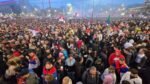
The report also notes that mass protests by citizens and students, ongoing for more than a year, have failed to bring about a change in government but have exposed the authoritarian nature of the regime, systemic corruption, and abuse of state institutions.