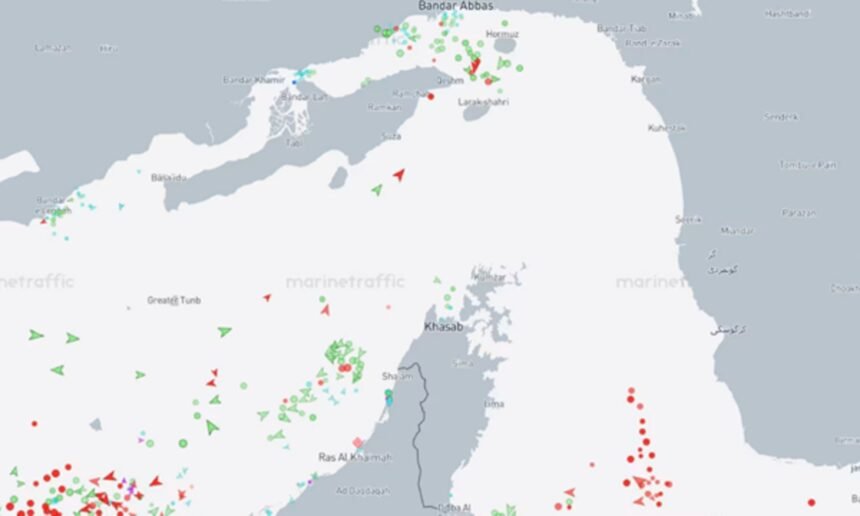
Maritime traffic data is showing limited movement in the Strait of Hormuz more than six hours after the United States and Iran announced a ceasefire, while an analyst warned that shipowners and insurers will need further positive signals before resuming traffic through this vital waterway.
“The ceasefire is a necessary first step, but it does not mean that commercial shipping will immediately return to normal in the international transit lanes of the Strait,” said Charlie Brown, a senior advisor on dark fleet tracking at United Against Iran and a former U.S. Navy officer, according to CNN.
“Shipowners are still awaiting authoritative guidance from maritime security channels, the flag states under which vessels operate, and, above all, from marine war-risk insurers before sending ships back into the Strait,” Brown added.
“The real signal to watch will be the ‘first movers’—the initial vessels willing to test the route. If these passages are completed safely, confidence will rise quickly, and the broader group currently waiting will follow.”
Iran has attacked at least 19 vessels near the Strait of Hormuz—linking the Persian Gulf to the Gulf of Oman—since the start of the conflict. The more than six-week disruption of this key waterway has choked global oil supplies and shaken international markets.
On Wednesday morning, Iran’s foreign minister stated that “safe passage through the Strait of Hormuz will be possible through coordination with Iran’s Armed Forces.” Iran and Oman will impose transit fees on ships passing through the Strait during the ceasefire period, according to Iran’s semi-official Tasnim news agency.