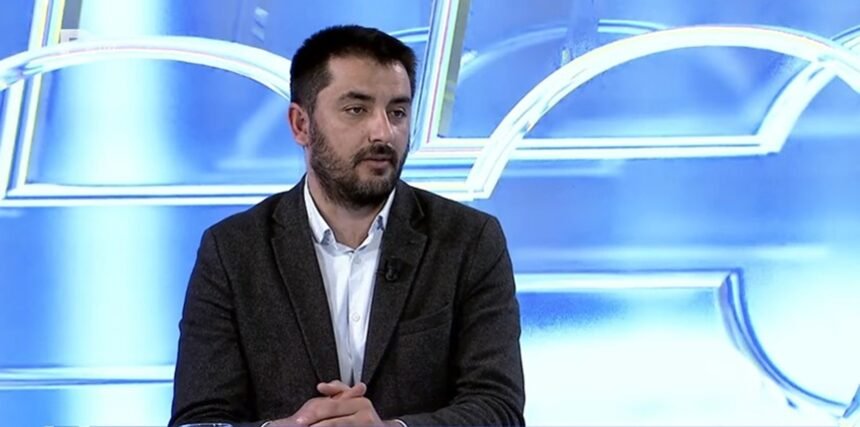
Dorajet Imeri, a political scientist and lecturer at the Faculty of Philosophy of the University of Pristina, has reacted to the latest developments surrounding Nicolás Maduro, linking them to a broader geopolitical context and raising the question of whether this new U.S. approach could also extend to Serbia’s president, Aleksandar Vučić.
In a Facebook post, Imeri argues that tensions between the United States of America and Venezuela should not be viewed as an isolated case.
“Developments surrounding the U.S.–Venezuela confrontation should be read within a broader geopolitical perspective,” he wrote.
Turning to the Balkans, Imeri emphasizes that Serbia continues to rely on alliances that run counter to the Euro-Atlantic orientation.
“In the Balkans, Serbia continues to rely on the same axis of alliances as Venezuela—Russia, China, and Iran,” he writes, underlining that Belgrade’s so-called policy of neutrality is becoming increasingly unacceptable to the West.
According to the political scientist, Washington and NATO are signaling a clear shift in their approach toward states that, while declaring neutrality, act against Western interests.
“Washington is making it clear that it will no longer tolerate efforts by Moscow and Beijing to undermine U.S.–NATO interests,” Imeri stresses.
He adds that Serbia’s continued provocations in the region are being seen as part of a broader geopolitical scheme and warns that, if this approach persists, the West’s response could be forceful. In this context, his provocative question—“Maduro’s arrest—could Vučić be next?”—is presented as a warning signal to Belgrade that political calculations without consequences may be nearing their end.