Kosovo’s Minister of Finance, Hekuran Murati, stated on Friday that despite operating with limited powers as a caretaker government throughout last year, the country’s economy performed well, with budget revenues meeting projections and continued growth in both economic activity and employment.
Murati acknowledged that the absence of legislative reforms and the delayed ratification of international agreements were limiting factors. However, he emphasized that the planned execution of revenues enabled the government to continue supporting the private sector, the broader economy, and households.
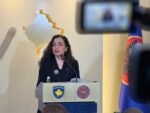
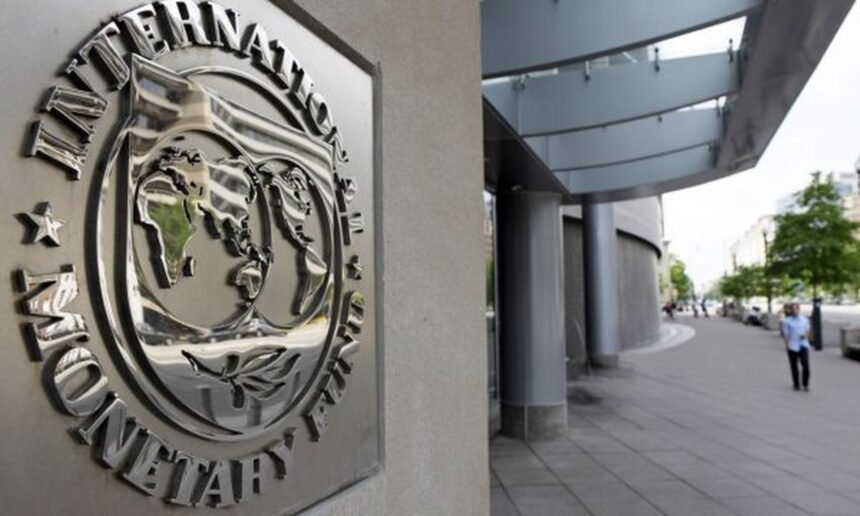
Speaking at a press conference following the visit of the International Monetary Fund mission to Kosovo, Murati said that the swift formation of institutions after the December 28 elections is expected to accelerate the processing and ratification of international agreements in the Assembly of the Republic of Kosovo, as well as the approval of the 2026 budget. This, he noted, would help avoid the risk of operating without a budget and prevent the potential loss of international funds.
“As a caretaker government, we did not have all instruments at our disposal, particularly legislative reforms and the approval of international agreements. Nevertheless, despite these constraints, the economy has performed well. Budget revenues were executed as planned, allowing us — even with limited competencies — to continue supporting the private sector, the economy, and households. This resulted in continued economic and employment growth. Now, following the outcome of the December 28 elections and the swift formation of institutions and the Assembly this week, we expect to move quickly with the ratification of international agreements and the 2026 annual budget. This eliminates the risk of being left without a budget or losing funds due to delays in ratification,” Murati said.
The Governor of the Central Bank of the Republic of Kosovo, Ahmet Ismaili, noted that during the latest mission discussions focused on the financial sector, economic outlook, and relevant policies.
The IMF welcomed the resolution of the political impasse, which coincided with the conclusion of consultations under Article IV. According to IMF mission chief David Amaglobeli, Kosovo’s economy has demonstrated resilience, but political uncertainty has come at a cost, slowing economic growth to 3.5 percent by the end of the third quarter of last year, down from 4 percent a year earlier.
Inflation reached 5.3 percent at the end of 2025, mainly driven by higher food prices, while the current account deficit widened to 9.6 percent due to strong imports of goods, including energy.
Regarding fiscal policy, the IMF assessed that Kosovo has built a solid track record of fiscal discipline, maintaining low public debt levels. However, the deficit deepened in 2025, partly to cushion the negative impact of the political stalemate. For 2026, it is projected to reach around 2 percent of Gross Domestic Product (GDP).
“We expect inflation to decline to 2 percent by the end of the year, but risks remain and policies should be recalibrated accordingly. Kosovo has built a strong record of fiscal discipline in recent years, with moderate deficits and low public debt. In 2025, the deficit widened, partly helping to mitigate the negative effects of the political impasse. Based on current policies, we project a 2026 deficit of around 2 percent of GDP, implying a positive fiscal impulse at a time when external imbalances are widening and buffers need to be strengthened. We encourage efforts to expand energy production capacity, including renewable sources, and to improve energy efficiency so that prices better reflect market conditions,” he added.