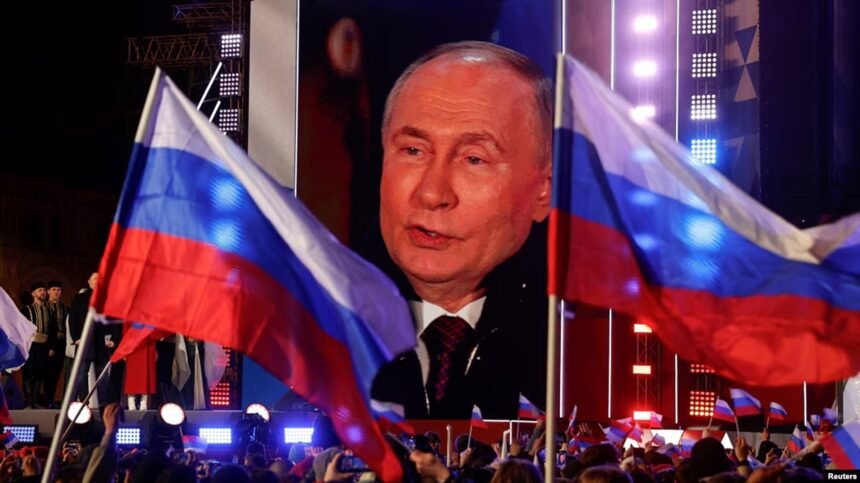
In recent weeks, a series of public opinion polls have recorded a decline in support for Russian President Vladimir Putin—something rarely seen in recent years.
Several factors may be contributing to this shift. Widespread mobile internet shutdowns ordered by the state have disrupted the lives of millions of Russians, particularly in Moscow. Ukrainian drone attacks have also interfered with air travel plans and significantly limited Russian oil exports in the Baltic Sea.
Additionally, the mass culling of infected livestock in Siberia has sparked outrage among farmers, while the prolonged war in Ukraine—now entering its fifth year—has led to mounting casualties and growing public fatigue.
Despite repeated Kremlin promises of a quick victory, the conflict has reached a near stalemate, with Ukrainian forces preventing decisive Russian advances. Estimates suggest that the number of dead and wounded has surpassed 1.2 million.
According to polling data, including surveys conducted by organizations linked to the state, public trust in Putin has dropped to its lowest level since September 2022. However, this decline does not signal an immediate political crisis, as Putin remains the dominant figure in Russia’s political system, often described as a form of “managed democracy.”
Experts note that the Kremlin remains highly sensitive to shifts in public opinion and is closely monitoring the trend internally.
Gulnaz Sharafutdinova pointed to multiple contributing factors, including disruptions caused by drone attacks, restrictions on messaging platforms like Telegram and WhatsApp, unfulfilled expectations regarding peace negotiations, and the broader economic strain caused by the prolonged war.
“This does not mean a revolution is imminent, but rising tensions are not good for the Kremlin,” she said.
Sociologist Konstantin Gaze added that while the trend is evident, it is still unclear which social groups are most affected by dissatisfaction.
“We’ve seen major interventions in daily life—such as internet shutdowns and restrictions—but also a more lasting trend,” he noted. “The war is penetrating deeper into the heart of European Russia. Drone attacks, strikes on oil refineries—these things accumulate over time.”
In addition to technological restrictions, economic pressures are also mounting. After years of growth driven by wartime spending, Russia’s economy is slowing down. Inflation has driven up prices, interest rates have risen sharply, and wages have stagnated.
Meanwhile, protests—rare in today’s Russia—have emerged, including demonstrations by farmers in Moscow following controversial livestock culling measures in Siberia.
The war remains a central factor. Since February 24 marked four years since the invasion began, efforts led by U.S. President Donald Trump to broker peace have stalled, amid ongoing disagreements over territory and security guarantees.
The last significant drop in Putin’s ratings occurred in September 2022, when the Kremlin realized the war would not end quickly and ordered a large-scale mobilization—triggering a wave of public anxiety and an exodus of hundreds of thousands of Russians.
Within Russia, dissenting voices have largely been silenced. Figures like Yevgeny Prigozhin—once a prominent critic of the war effort—died in a plane crash widely believed to have been an assassination after his failed rebellion in 2023.
More recently, pro-Kremlin commentator Ilya Remeslo sparked public attention by issuing sharp criticism of the war and even accusing Putin of damaging Russia.
Overall, while Putin’s authority remains firmly intact, the emerging signs of declining public support suggest growing pressure beneath the surface of Russian society.