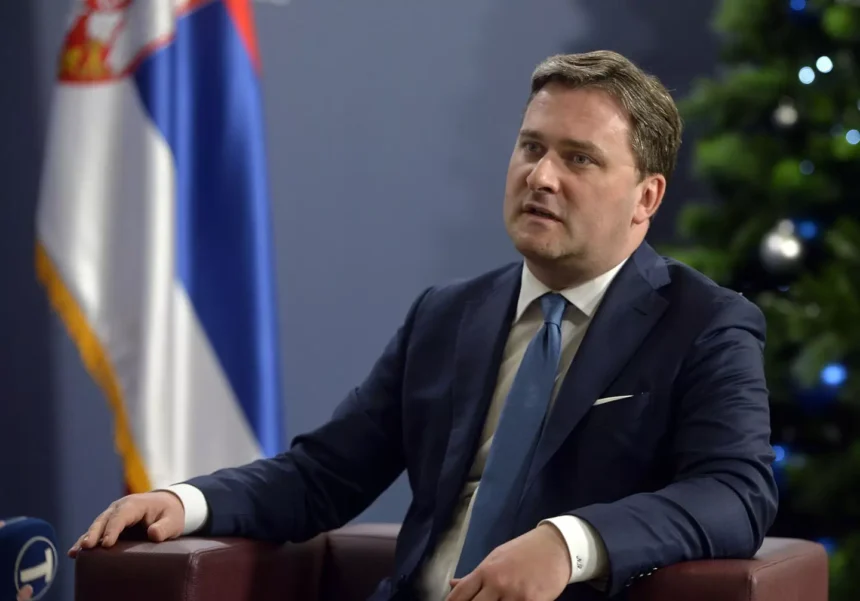
Following the publication by Danas of the indictment against Serbian Minister of Culture Nikola Selaković in the General Staff (Generalštab) case, legal experts are assessing whether the charges are strong enough to result in a conviction. The case is further complicated by President Aleksandar Vučić’s announcement that he would pardon all defendants should the Organized Crime Prosecutor’s Office (TOK) formally pursue the case.
Legal analysts interviewed by Danas agree that the indictment contains serious and substantial evidence against Selaković, leaving him little room for legal defense, aside from political statements and attacks on the prosecution.
They also warn that a presidential pardon would once again send the message that political power, rather than the rule of law, determines outcomes in Serbia.
Key Legal Deficiency Identified in the Indictment
Retired prosecutor Jasmina Paunović highlighted a notable omission in the indictment.
“One of the mandatory elements of an indictment is the proposed sentence for each defendant,” Paunović said.
“What is also missing, in my view, is a proposal for an additional measure—namely, a ban on performing official duties or professional activities.”
Such a measure, she explained, would ensure that convicted officials are temporarily barred from holding public office, alongside criminal sanctions.
Paunović noted that the extensive scope of the indictment, combined with a large volume of written evidence, may actually leave room for the defense to deny criminal responsibility, potentially prolonging the proceedings, especially given the political sensitivity of the defendants involved.
She emphasized that the outcome now rests largely with the presiding judge, who must prevent the trial from turning into a political spectacle and focus strictly on facts and evidence.
Regarding Vučić’s remarks, Paunović said that a presidential pardon could occur either before the trial begins or after a first-instance verdict.
Lawyers: Serious Charges, Political Interference Undermines Justice
Defense attorney Nikola Lakić described the accusations against Selaković and other defendants as grave and credible.
“Everything we have seen over the past months points to serious charges,” Lakić said, adding that Selaković’s reliance on political rhetoric rather than factual defense reflects the strength of the prosecution’s case.
Lakić sharply criticized President Vučić’s announcement of mass pardons, calling it scandalous but expected.
“The purpose is to protect close political allies and present himself as the person who decides everything in Serbia—including court cases,” he said.
According to Lakić, the move also aims to undermine the entire judicial process, as a full trial could potentially expose links to a broader organized criminal structure within the highest levels of government.
Threat to the Rule of Law
Attorney Vladimir Terzić echoed these concerns, warning that pre-announced pardons constitute direct pressure on the judiciary.
“In serious states, such announcements are considered unacceptable interference,” Terzić said.
“A pardon is an exception applied only after a final verdict—not a political tool used during proceedings.”
He concluded that while such statements may not formally invalidate the trial, they strike at the very foundations of the rule of law, rendering judicial decisions symbolic rather than binding.