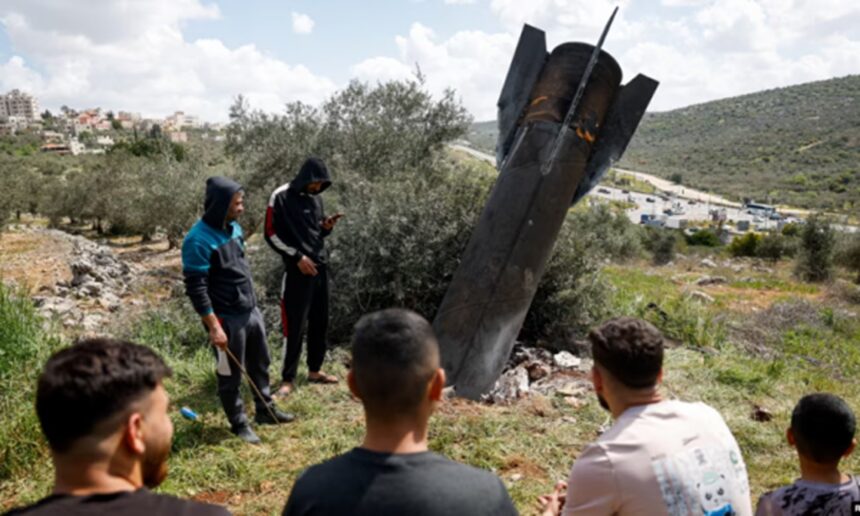
Iran carried out missile and drone attacks targeting Israel and Kuwait on Tuesday, roughly a day after U.S. President Donald Trump announced “very productive” talks aimed at ending the conflict with Tehran, now entering its fourth week.
At least six people were injured in four locations in Tel Aviv due to Iranian missile and drone debris. Kuwaiti officials reported that their air defense systems responded to “missile and drone attacks,” with the sounds of explosions caused by intercepting and neutralizing incoming threats.
The strikes targeted multiple sites across the Middle East, amid conflicting reports about whether negotiations for a ceasefire were underway following U.S. and Israeli strikes on Iran since February 28.
Trump previously said that his weekend discussions with a “high-ranking” Iranian official were significant enough to postpone potential attacks on Iranian energy facilities for five days, contingent on Iran reopening the Strait of Hormuz. Iran has repeatedly denied direct talks, although some media reports cited intermediaries facilitating message exchanges between the two sides.
Kenneth Pollack, former White House and CIA analyst, now at the Middle East Institute, said there is little evidence supporting claims of imminent diplomatic progress. According to him, Iran has issued preconditions such as U.S. compensation payments and troop withdrawals from the region—demands unacceptable to Trump.
Pollack noted, “Trump’s statements appear more aimed at calming markets than reflecting actual progress.”
The conflict has significantly disrupted energy transport, particularly through the Strait of Hormuz, which handles about one-fifth of global oil and gas. This has shaken financial and energy markets, increased fuel costs, raised concerns over global inflation, and heightened fears that the conflict could escalate regionally.
The threat to Gulf power grids also raises concerns about mass disruptions to potable water desalination, further intensifying oil market volatility.
Brent crude prices dropped roughly 10% following Trump’s comments on negotiations but rebounded around 3% on Tuesday to over $102.84 per barrel after the regional attacks.