Iran has expressed readiness to negotiate a nuclear agreement with the United States, provided that Washington lifts sanctions imposed on the Iranian regime.
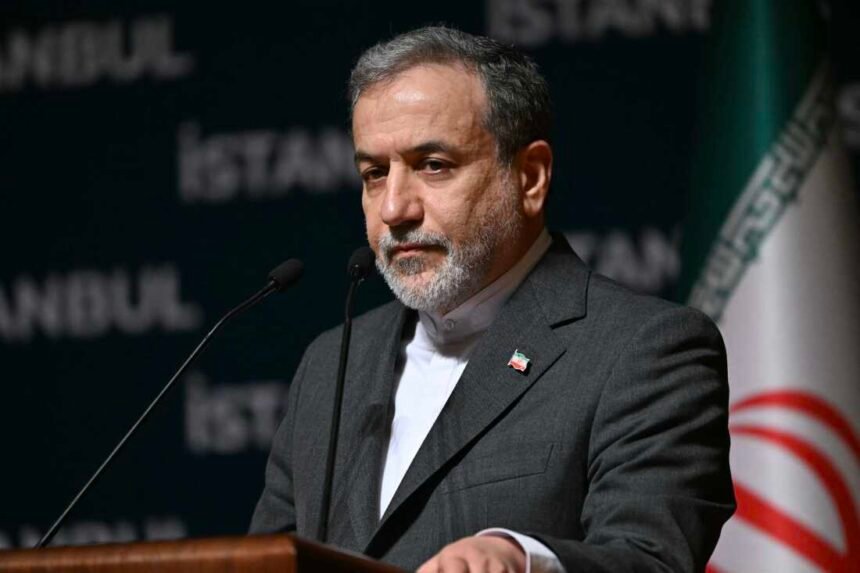
In an interview with BBC in Tehran, Iranian Deputy Foreign Minister Majid Takht-Ravanchi said, “We are ready to discuss this and other issues related to our nuclear program, provided they are willing to start talking about the sanctions.” He added that sanctions must also be part of the negotiations and emphasized that the ball is now in the U.S. court to demonstrate willingness for an agreement.
Takht-Ravanchi did not clarify whether this refers to some or all U.S. sanctions, which target Iranian banks, oil exports, and other sectors implemented in recent years.
Upcoming Geneva Talks
The announcement precedes a new round of U.S.-Iran talks in Geneva on 17 February, with U.S. envoys Steve Witkoff and Jared Kushner participating and Oman acting as mediator. Earlier indirect talks between Tehran and Washington were also hosted by Oman.
As a sign of willingness to compromise, Iran offered to enrich uranium up to 60 percent, while zero-level enrichment, demanded by the U.S., is reportedly no longer on the table.
Western powers have long suspected Iran of pursuing nuclear weapons, but Tehran insists its program is solely for civilian purposes. The 2015 nuclear deal aimed to prevent Iran from acquiring nuclear weapons, but the U.S. under Donald Trump withdrew in 2018, reinstating sanctions.
U.S. Military Posture
President Donald Trump described preliminary negotiations as “positive” but reiterated that a regime change in Iran would be the best outcome. He also confirmed the deployment of a second U.S. aircraft carrier, USS Gerald R. Ford, to the Arabian Sea, joining a “massive” U.S. naval presence.
Trump has repeatedly warned of military action against Iran if a nuclear deal is not reached. Last year, the U.S. and Israel conducted a 12-day bombing campaign targeting Iranian nuclear and military sites.
IAEA Monitoring and Human Rights Context
At the Munich Security Conference on 13 February, Rafael Grossi, head of the International Atomic Energy Agency (IAEA), stated that Iran’s nuclear infrastructure has been widely damaged and that future monitoring must focus on remaining facilities and potential development of capabilities.
IAEA inspectors have returned to Iran but do not yet have access to sites hit during last year’s bombings. The upcoming talks also follow recent violent crackdowns on nationwide anti-government protests, in which thousands were killed and over 53,000 arrested, according to human rights organizations.