Countries across the Middle East are bracing for a potential new conflict as the United States expands its military presence in the region, fueling expectations of possible U.S. strikes against Iran amid escalating tensions over Tehran’s nuclear and missile programs.
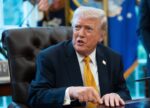
U.S. President Donald Trump issued his strongest warning yet on January 28, telling Tehran that “time is running out” to reach an agreement on its nuclear and missile activities or face consequences “far worse” than previous joint U.S.-Israeli strikes that devastated Iranian nuclear facilities. The warning came as U.S. naval forces moved toward regional waters.
Iranian Foreign Minister Abbas Araghchi responded by saying Iran is prepared to “respond immediately and forcefully” to any attack.
Gulf States Fear Retaliation and Economic Fallout
Analysts say countries hosting U.S. military forces, particularly members of the Gulf Cooperation Council (GCC), are deeply concerned about Iranian retaliation.
“Countries where U.S. troops are stationed are worried about some form of Iranian counterattack,” said Farzan Sabet, a researcher at the Geneva Graduate Institute.
The GCC includes Saudi Arabia, the United Arab Emirates, Bahrain, Kuwait, Oman, and Qatar — oil-rich Sunni Arab monarchies that host major U.S. military bases or provide logistical support.
This week, Saudi Arabia followed the UAE in declaring that it would not allow its airspace or territory to be used for military operations against Iran, a move analysts interpret as an attempt to deter escalation by Washington.
“Direct attacks — whether by Iran or its proxies — on regional energy infrastructure would be devastating for the global economy,” Sabet warned.
The GCC countries produce around a quarter of the world’s oil supply and more than 10% of global natural gas, making them critical to global trade, energy markets, and supply chains.
Balancing Security and Regime Change Calculations
According to Pier Camillo Falasca of the Euro-Gulf Information Centre in Rome, Gulf states are pursuing two immediate objectives:
“They want to prevent the spread of the crisis and keep their countries safe.”
While publicly cautious, Falasca noted that Gulf countries are not opposed to regime change in Iran, but fear the cost of a chaotic transition.
“Their interest lies in a managed and orderly transition, not a power vacuum,” he said.
Regional governments are strengthening security at ports, airports, and energy facilities, while quietly preparing their populations for potential instability.
U.S. Military Buildup Raises Stakes
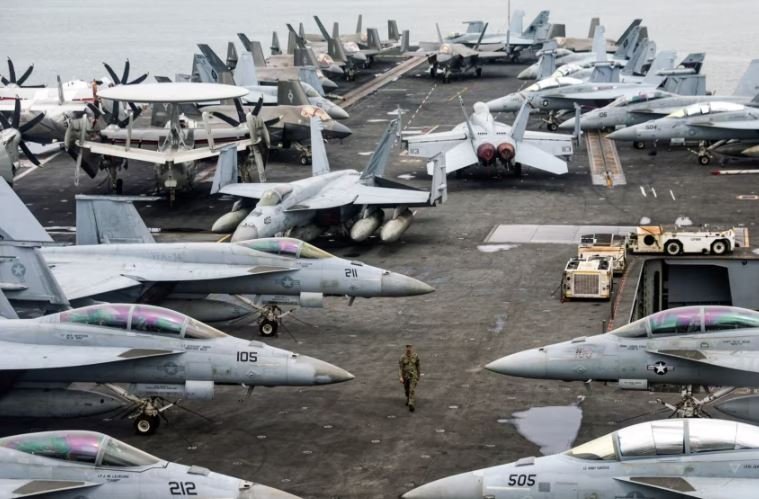
The United States has deployed the aircraft carrier USS Abraham Lincoln to the region, along with additional warships capable of precision missile strikes, air operations, and ground support. U.S. media also reported that another warship, the USS Delbert D. Black, entered the region on January 29.
Despite the buildup, Trump claimed he sought to avoid direct confrontation from Gulf territory, stating that “a massive armada is heading toward Iran.”
Regional Flashpoints Beyond the Gulf
Experts warn that a U.S.–Iran conflict could quickly spill over into neighboring countries, particularly Iraq, where Iran-linked militias remain active.
“There are actors within Iraq who could drag the country into the conflict,” Sabet said, referring to Iran-aligned militias within the Popular Mobilization Forces, which have previously attacked U.S. troops.
Concerns have intensified following reports that Iran-backed politician Nouri al-Maliki has emerged as a leading candidate for Iraq’s next prime minister.
Beyond Iraq, Turkey, Azerbaijan, and Pakistan are also preparing for long-term consequences, including potential refugee flows and ethnic unrest inside Iran.
Iran’s internal diversity — including Arab populations in Khuzestan, Azeris in the northwest, Baluch communities along the Pakistan border, and Kurdish regions in the west — raises fears that ethno-sectarian militancy could be reignited by a wider conflict.
“These countries are deeply concerned about the kind of instability that could emerge from ethnic and linguistic militancy,” Sabet said.