Serbia is facing a simultaneous deterioration of relations with nearly all of its key foreign policy partners — the European Union, the United States, and Russia — raising serious concerns about the country’s international credibility and strategic direction.
From the NIS energy dispute, to failed attempts to strengthen ties with U.S. political circles, and open criticism from the European Union, analysts warn that Serbia’s long-standing policy of balancing between global powers is becoming increasingly unsustainable.
NIS Case Deepens Tensions Between East and West
The situation surrounding Naftna Industrija Srbije (NIS) has further complicated Belgrade’s position between Washington and Moscow. U.S. sanctions targeting Russia’s energy sector have placed NIS — majority-owned by Russian interests — at direct risk, increasing pressure on Serbia to reduce Russian influence in its energy sector.
Washington has made it clear that cooperation with Russian energy companies carries a political cost, while Moscow views NIS as a strategic asset and has warned that sidelining it would damage bilateral relations. As a result, Serbia finds itself caught between Western sanctions demands and the need to maintain energy stability and traditional ties with Russia.
Failed Outreach to U.S. Political Circles
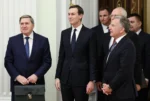
A planned redevelopment project at the former General Staff headquarters in Belgrade, involving a company linked to Jared Kushner, son-in-law of U.S. President Donald Trump, was presented by Serbian authorities as a symbol of rapprochement with influential American political and business circles.
However, domestic backlash over transparency, heritage protection, and legal concerns, followed by the withdrawal of Kushner’s firm, sent a negative signal. Observers interpret the episode as further evidence that Belgrade is struggling to establish stable, long-term partnerships in Washington.
Growing Criticism From the United States and the EU
The U.S. Congress recently adopted the National Defense Authorization Act (NDAA), which includes provisions highlighting serious concerns over democracy in Serbia, unfair electoral conditions, pressure on civil society, and unresolved issues related to Kosovo.
At the same time, European Union officials have openly criticized Serbia’s leadership, citing anti-EU rhetoric, democratic backsliding, and lack of political will for reforms. EU resolutions and progress reports have questioned Serbia’s commitment to EU membership, warning that continued stagnation could result in restrictions on access to EU growth funds for candidate countries.
Vučić: ‘Serbia Is on Its Own Side’
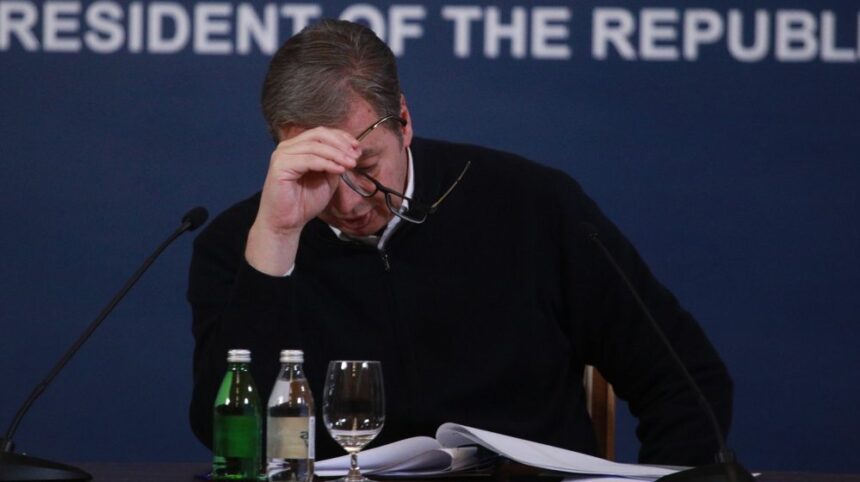
President Aleksandar Vučić responded by stating that Serbia will pursue its own path, regardless of pressure from global powers.
“Serbia is on its own side. We do not want war. We are strengthening our military to ensure peace and deterrence,” Vučić said.
Despite such statements, experts argue that similar warnings from Washington, Brussels, and Moscow point to a common conclusion: Serbia’s current foreign policy approach is no longer sustainable.
Experts Warn of International Isolation
Former Serbian ambassador Branka Latinović said Serbia’s international position is deteriorating on multiple fronts.
“At nearly the same time, all of Serbia’s key partners expressed concern over corruption, democratic decline, media freedom, and reliability,” she noted, adding that even Russia has begun signaling dissatisfaction, particularly regarding NIS.
Latinović stressed that Serbia’s EU accession process is effectively stalled, and that symbolic gestures or rhetorical commitments will not be enough to reverse the trend.
Similarly, Mijat Kostić, researcher at the New Third Way think tank, warned that Serbia’s traditional ‘four-pillar’ foreign policy doctrine is collapsing under intensified geopolitical polarization.
“Sitting on multiple chairs now carries the risk that all of them will be pulled away at once,” Kostić said, pointing to strained relations with the EU, Russia, and the U.S.
A Strategic Choice Ahead
Analysts emphasize that Serbia is geographically, economically, and institutionally tied to Europe, with the EU remaining its largest trade partner and investor. They argue that the current EU enlargement momentum represents a rare opportunity for Serbia to accelerate reforms and secure long-term stability.
At the same time, expectations of unconditional support from Russia are increasingly proving illusory, as Moscow continues to act primarily in its own strategic interest.
“If the partnership were truly equal, Russia would have protected Serbia from sanctions risks,” Kostić noted, adding that Serbia’s support for Ukraine’s territorial integrity contradicts Russia’s actions in the war.
Conclusion
Serbia now faces a defining foreign policy crossroads. Experts agree that internal reforms, democratic renewal, anti-corruption measures, and alignment with EU foreign policy will largely determine whether the country regains credibility — or slides further into diplomatic isolation.