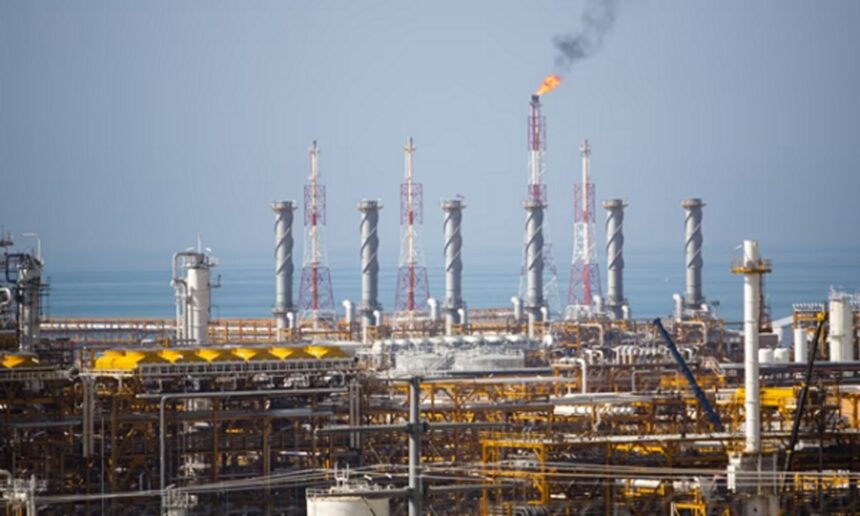
When Israeli aircraft struck the South Pars gas complex near Asalouyeh, they hit more than pipelines and compressors.
They targeted the most critical part of Iran’s infrastructure—a key field that provides around 75 percent of the country’s domestic gas supply and generates nearly 80 percent of its electricity.
The strike halted production at two refineries with a combined daily capacity of 100 million cubic meters, driving prices sharply higher and prompting retaliatory actions by Iran against energy infrastructure in Persian Gulf states, including the Ras Laffan LNG terminal in Qatar.
South Pars had already been facing difficulties even before the first bombs fell. Stretching along the maritime border with Qatar in the Persian Gulf—where the same reservoir is known as the North Dome and supplies around 20 percent of the world’s LNG—the Iranian side of the field has long suffered from severe underinvestment.
Since Washington withdrew from the nuclear deal in 2018 and imposed tough sanctions on Tehran, international companies, including TotalEnergies, have exited, and much of the field’s aging infrastructure has not been modernized.
Shahram Kholdi, a professor of international relations in Canada, said the field was already in a fragile condition.
“The Islamic Republic has invested very little in the oil and gas sector since [former U.S. President] Donald Trump withdrew from the nuclear deal,” he told Radio Farda of Radio Free Europe/Radio Liberty. “Much of this infrastructure was already in need of renewal. Qatar is extracting a much larger share from the shared reservoir as our infrastructure has aged and deteriorated.”
Even in peacetime, Iranians have faced gas shortages, as the government has diverted supplies toward petrochemical exports while relying on heavy fuel oil in power plants—contributing to widespread air pollution in cities.
Israeli officials say the strike was coordinated with the United States and aimed at reducing the Islamic Republic’s ability to sustain its military. However, analysts warn that the damage cannot be confined to the military sphere alone.
Umud Shokri, an energy security analyst and professor at George Mason University, argued that targeting South Pars is highly significant.
“Targeting South Pars is a worst-case scenario because it supports most of Iran’s gas supply, powering electricity generation, heating, industry, and petrochemicals,” he said. “The disruption does not only hit exports but daily life. You should expect almost immediate power outages, supply shortages, and inflation—meaning ordinary Iranians will feel the impact first.”
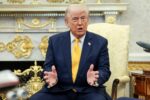
Since the launch of the military operation, Donald Trump has stated that there will be “no deal with Iran except unconditional surrender.”
However, both analysts are skeptical of this logic.
Shokri argues that such strikes do not clearly destabilize the clerical establishment. “They weaken it, yes, but also give it justification to tighten control and shift blame,” he said.
He is also doubtful that civilian pressure will translate into political change while the conflict continues. “No, never,” he said when asked whether people under active bombardment would take to the streets. According to him, the main risk lies in what happens after the war ends.
“Once a ceasefire is reached, the Islamic Republic will not be able to quickly restore the gas facilities in Asalouyeh,” Kholdi warned. “The state will face major shortages, even if the Islamic Republic collapses.”
Iran, he added, would likely be forced to import gas from neighbors such as Turkmenistan during any transition period, while reconstruction—requiring advanced technology from countries like Japan or South Korea and financing from institutions such as the World Bank and the International Monetary Fund—could take years.
He stressed that this represents a challenge for Iran’s opposition movements, whose transition frameworks were developed before South Pars became a target.
“I think everyone’s calculations included the hope that the leaders of the Islamic Republic would show some rationality and simply step down and leave,” he said. “Let me hold everyone accountable, including myself.”