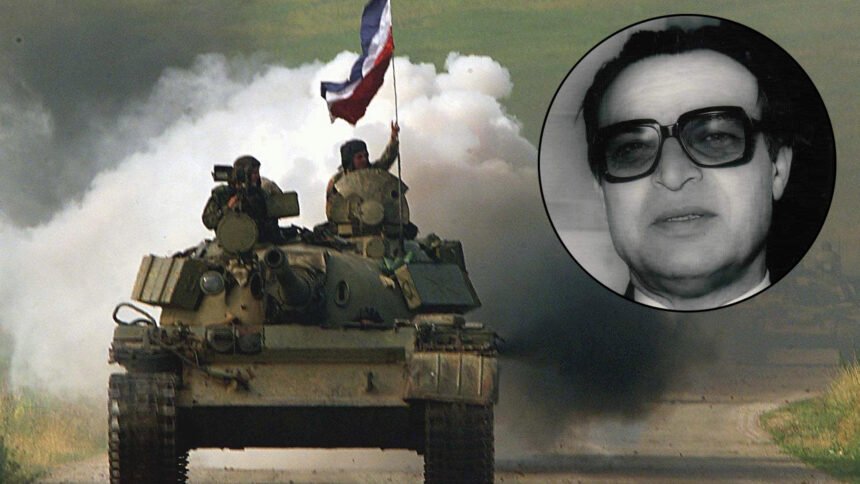
A cold-case killing from June 16, 1999, in the village of Mazgit near Obiliq, Kosovo, has resurfaced after more than two decades.
Victim: Miloš Vlašković, a retired police officer, was shot 16 times while trying to stop a robbery. Investigations indicate that the perpetrators were two reservists of the Yugoslav Army, who have never faced justice.
Initially, Vlašković’s family suspected local Albanians were involved, but later it emerged that the suspected assailants were Yugoslav Army reservists. According to a relative living outside Serbia, local Mazgit residents even called the family to assure them that no Albanian villagers were involved and that the family could visit Vlašković’s grave freely.
The murder occurred just one week after the Kumanovo Agreement, at a time when the Yugoslav Army was withdrawing and Albanian residents were gradually returning to their homes. Mazgit was nearly empty when the fatal shots were fired.
Incident details: The two reservists, stationed in nearby Milloshevë, had gone out without authorization and attempted burglaries. They encountered two brothers, the Shala siblings, who had gone to check on their home. Miloš Vlašković, unarmed and in civilian clothing, came to assist and was shot 16 times. The Shala brothers survived.
The case was investigated by the War Crimes Department and witnesses, including the Shala brothers, gave testimonies via video link due to fear of traveling to Belgrade. The suspects were identified as Zorana V. and Radoja R.
However, in 2015, the War Crimes Prosecutor’s Office declared the case outside its jurisdiction, transferring it to the High Public Prosecutor’s Office in Niš, which later passed it to the Prosecutor’s Office in Mitrovica, Kosovo. No concrete action was taken, and the case remains unresolved.
Vlašković, a former teacher and analyst in regional police structures, was not actively involved in combat and was respected as a neighbor. According to his family, he was killed while defending Albanian neighbors from robbery and violence.
Family statement: The case exemplifies a failure of justice, as the identified suspects continue to live freely despite evidence and witness identification.