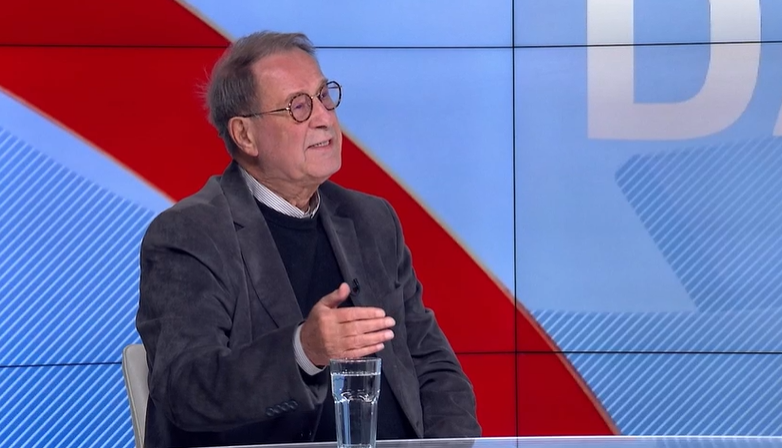
Political analyst Boško Jakšić has commented on President Aleksandar Vučić’s recent announcement about the possibility of holding parliamentary and presidential elections at the same time, noting that the move is strategic, despite the fact that Vučić is constitutionally barred from running for another presidential term.
Yesterday, local elections were held in Sečanj, Negotin, and Mionica. Although the SNS claimed victories, the elections were marred by vote manipulation, intimidation, and attacks on opposition candidates and observers.
Jakšić explained that Vučić’s proposal to combine elections is a calculated maneuver to leverage his personal popularity.
“Parliamentary elections might be called in spring or early autumn, but he leaves open the option for simultaneous presidential elections. It’s a maneuver—his personal rating exceeds that of SNS. By combining elections, the ruling party gains an advantage. He is not a candidate, but lends his name; whoever runs will essentially be a puppet. This explains why he would cut his own mandate short—it’s about helping vulnerable SNS candidates,” Jakšić said.
Analyzing the local election results, Jakšić pointed out that they indicate a continuing rise in opposition support, though not enough to challenge the SNS’s hold on power in a system dominated by violence and lawlessness.
“The decline in support for SNS is not enough to lose power. Vučić’s promises of improving rule of law are largely performative—why would he endanger his increasingly precarious position?” he noted.
Jakšić emphasized the importance of unity among students and the opposition, who are preparing to present a joint list in future elections.
“I fear divisions more than repression. If the Vučić-led front remains united, the opposition and student front must also be unified. These elections should function more as a referendum on the regime than ordinary local elections,” Jakšić said.
He added that while some names on the student list may not be personally appealing, it is crucial to exercise democratic rights and support initiatives that strengthen civic participation.
“Serbia lacks a tradition of democracy. Half a century under Nikola Pašić taught that laws apply only to opponents; under Tito, laws were ignored like a drunkard ignores a fence. Today, fear has shifted—from the people to the corridors of power,” Jakšić concluded.
Jakšić also highlighted the paradox of Vučić’s strategy: while local elections allow for tight control and pressure, nationwide parliamentary elections would expose the regime to greater scrutiny. Reports of election manipulation sent to Brussels could produce international pressure, indicating that the landscape is slowly shifting.