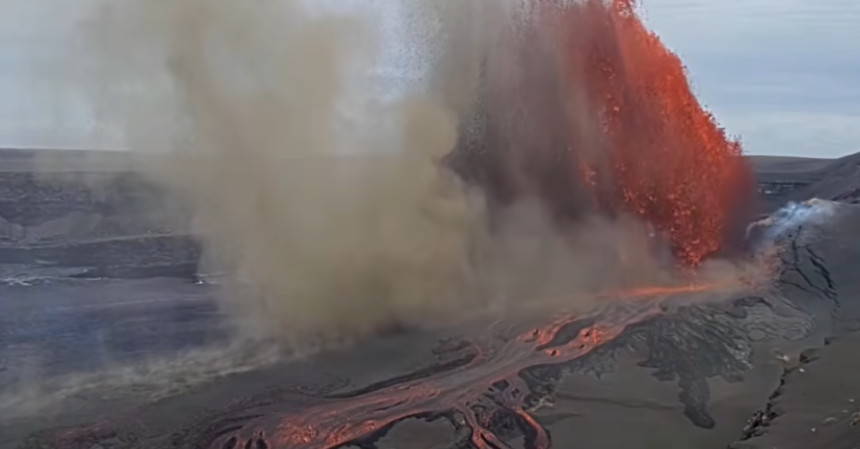
The Kilauea volcano, one of the most active volcanoes in the world, erupted on Thursday on Hawaii’s Big Island, sending lava fountains more than 200 meters into the air.
According to the U.S. Geological Survey (United States Geological Survey), lava “fountains” began erupting shortly after 11:00 local time. By Thursday evening, lava flows and ash clouds were spreading down the volcano’s slopes.
Park closure and safety warnings
The Hawaii Volcanoes National Park, a major tourist attraction known for viewing volcanic activity, was closed following the eruption.
The National Park Service advised visitors to wear protective clothing, including long sleeves, long pants, and eye protection, to reduce exposure to volcanic ash and tephra — small, glass-like volcanic fragments.
The National Weather Service issued an ashfall advisory for the southeastern region of the Big Island through midnight local time.
Officials warned that larger volcanic fragments could fall near the summit and several miles downwind, while smaller particles may cause eye and respiratory irritation.
Ongoing volcanic activity
Kilauea has erupted dozens of times since 1952, with eruptions lasting from a few weeks to over a year.
One of its most destructive recent events occurred in 2018, when lava flows destroyed homes and forced large-scale evacuations.