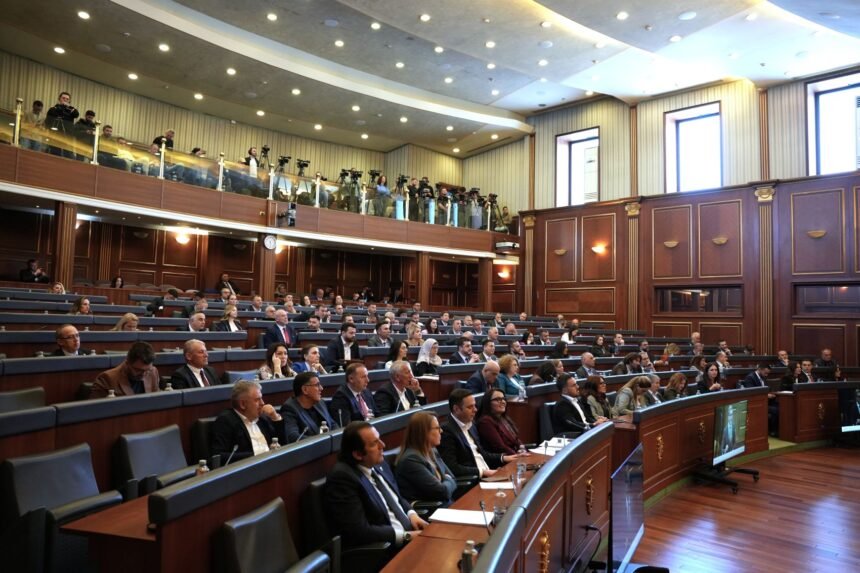
The Assembly of Kosovo has approved in principle the draft law on mandatory health insurance, marking a significant step toward reforming the country’s healthcare system.
The legislation passed with 65 votes in favor, with no votes against or abstentions, reflecting broad political support at this stage.
Minister of Health Arben Vitia stated that the draft law aims to ensure universal coverage of healthcare services, improve public health, and strengthen disease prevention mechanisms. He described the initiative as a key step toward building a sustainable and affordable healthcare system for all citizens.
According to Vitia, the proposed framework will guarantee equal access to basic healthcare services, reduce the financial burden on individuals, and ensure fair treatment across all population groups. The law also предусматриes the establishment of a dedicated Health Insurance Fund, which will be responsible for financing and managing the system.
The minister noted that the legislation introduces new payment models for healthcare services covered under the scheme, although specific details regarding benefit packages and contribution rates have yet to be finalized. He added that outpatient drug coverage has been identified as a priority component of the reform.
The draft law is based on the principle of equality, ensuring that access to healthcare services will not differ between contributors, their dependents, or individuals whose insurance is covered by the state. Vulnerable groups are expected to be exempt from contributions.
Despite supporting the bill in principle, opposition lawmakers raised concerns over several unresolved issues. Representatives from the Democratic League of Kosovo (LDK) indicated that the proposal includes contributions of 3.5 percent from both employers and employees, while pensioners may also be required to contribute the same percentage from their pensions.
Members of the Democratic Party of Kosovo (PDK) and the Alliance for the Future of Kosovo (AAK) also supported the bill in principle, emphasizing the importance of further refinement between the two readings to ensure effective implementation.
Concerns were also raised about the timeline for implementation, with lawmakers noting that the law is expected to enter into force five years after adoption—an issue critics say could delay much-needed healthcare reforms.
The draft law will now proceed to further review and amendment before a final vote.