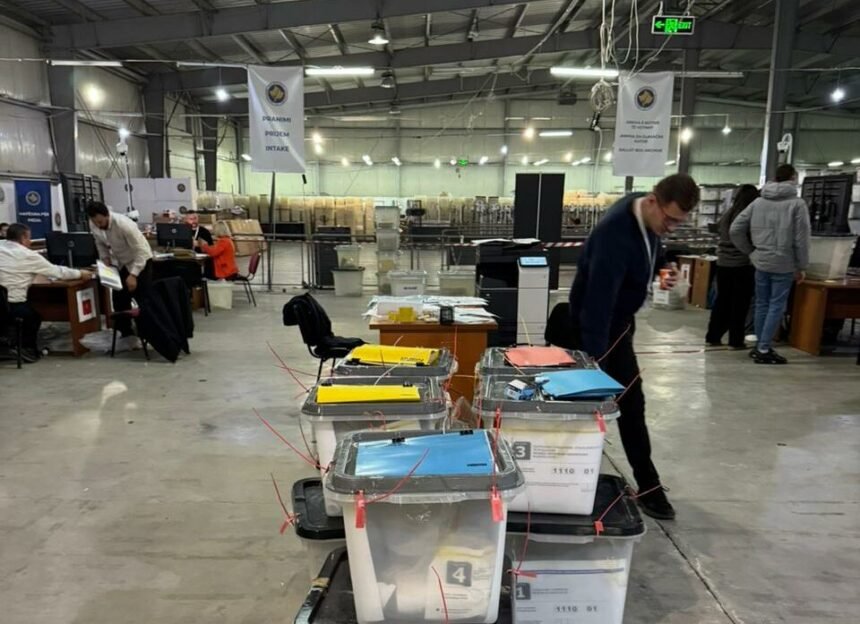
The Central Election Commission (KEC) of Kosovo has announced that postal voting for citizens abroad will not start as planned, due to delays in the delivery of ballots printed in Slovenia. The measure affects voters registered to vote by mail for the 28 December early parliamentary elections.
KEC spokesperson Valmir Elezi told RTK that because these are early elections organized on a short timeline, postal voting could not begin as scheduled on 12 December. He stated that preparations are ongoing for the process to start early next week.
“Currently, ballots for voters abroad are being printed. We plan for them to arrive in Kosovo by Friday, 12 December. Once they arrive, the electoral service will prepare individual packages for each voter and deliver them through the contracted courier. Given the early election schedule, it is challenging for postal voting to begin as planned on 12 December, but preparations are underway for next week,” said Elezi.
Scope of Voting Abroad
Out of 77,085 registered voters abroad, 57,829 are registered for postal voting, while 19,260 will vote physically at diplomatic missions. According to KEC, postal voting is scheduled to end on 27 December, the day before elections in Kosovo, when voting at diplomatic missions will also take place across 24 countries, including 23 embassies and 14 consulates.
Initially, KEC had planned to organize voting abroad in 50 diplomatic missions across 36 countries, plus 10 additional voting centers. However, a 10 December KEC decision, following the Supreme Court and PZAP rulings, limited the process to Kosovo’s diplomatic missions only, reducing accessibility for voters abroad.
Critical Concerns
Election experts warn that short timelines, delays in ballot printing, and limitations on voting centers abroad could undermine voter participation and cast doubts on the inclusiveness of the electoral process. With tens of thousands of Kosovo citizens abroad relying on mail-in voting, any further delays may affect the credibility of the election outcome.
KEC officials maintain that all measures are being taken to ensure that postal votes are delivered and counted on time, but the compressed timeline highlights the logistical challenges of organizing early elections under constrained conditions.