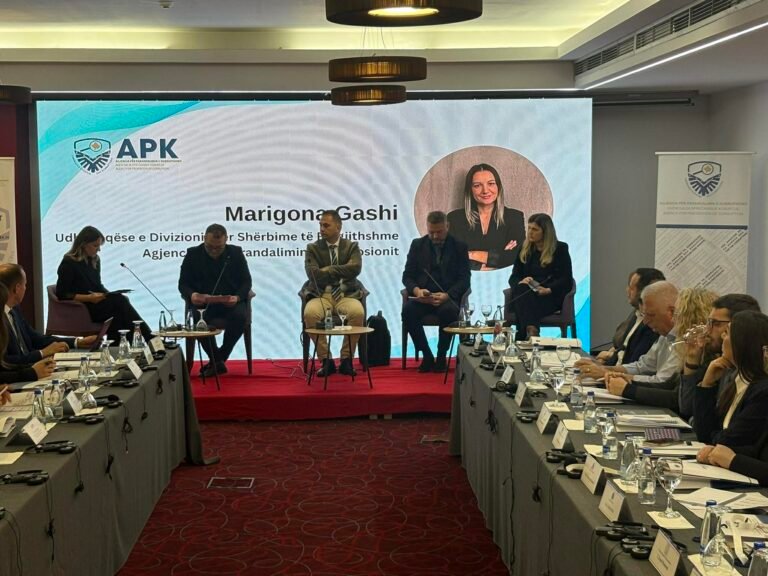
Kosovo’s Agency for Prevention of Corruption (APK), together with the Consultative Forum of Civil Society, marked Integrity Week 2025 as part of the International Anti-Corruption Day, presenting new assessments on the state of institutional integrity and the ongoing challenges in implementing integrity plans across municipalities.
The event, held on Monday, shed light on persistent weaknesses in governance, the lack of accountability mechanisms, and the need for a deeper institutional commitment to the fight against corruption.
APK: Integrity Is a Duty, Not an Option
APK Director Yll Buleshkaj emphasized that institutional integrity must remain a core obligation for public officials. He pledged that the agency will continue to act impartially and professionally in all of its decisions.
“Integrity is not optional — it is our duty. We will continue to insist on accountability, transparency, and a culture where corruption is not tolerated, neither in big cases nor in small ones,” Buleshkaj stated.
He added that the agency cannot tackle corruption alone without full cooperation from public institutions.
Municipal Integrity Plans Reveal Repeated Failures
Burim Sadiku, head of Integrity and Strategy at APK, presented a troubling overview of municipal integrity plans. Monitoring results show recurring issues, including:
- Underestimation of real corruption risks
- A formalistic approach to drafting integrity documents
- Lack of reliable data for proper risk assessment
Out of 108 institutions monitored, 15 failed to report at all, while 13 were notified to update their required documentation.
Experts Highlight Structural Weaknesses
University professor Bekim Baliqi noted that the integrity planning process suffers from fundamental flaws:
- Short preparation deadlines
- Lack of human and financial resources
- Unclear assignment of responsibility within institutions
Baliqi emphasized that although Kosovo has made progress compared to some regional countries, such as Bosnia and Serbia, it still lags behind Montenegro and North Macedonia in effective implementation of anti-corruption mechanisms.
Civil Society: No Budget for Preventive Measures
From the NGO Lëvizja FOL, external consultant Albert Avdiu warned that one of the biggest obstacles remains the lack of dedicated funding for preventive measures identified in integrity plans.
“The law does not foresee additional budget for integrity plans. Institutions are expected to address risks within existing resources, which in many cases is unrealistic,” Avdiu said.
A Call for Greater Responsibility and Transparency
The discussions during Integrity Week underline the ongoing struggle Kosovo faces in building strong, transparent institutions. Despite progress, experts warn that without serious political commitment, adequate funding, and clear accountability mechanisms, integrity plans risk becoming symbolic documents rather than tools for real change.