The Ombudsperson of the Republic of Kosovo has raised serious concerns that the Kosovo Specialist Chambers are conducting trials using allegedly illegal evidence originating from Serbia, including documents dated after 1999—a period when Serbia no longer held lawful jurisdiction over Kosovo.
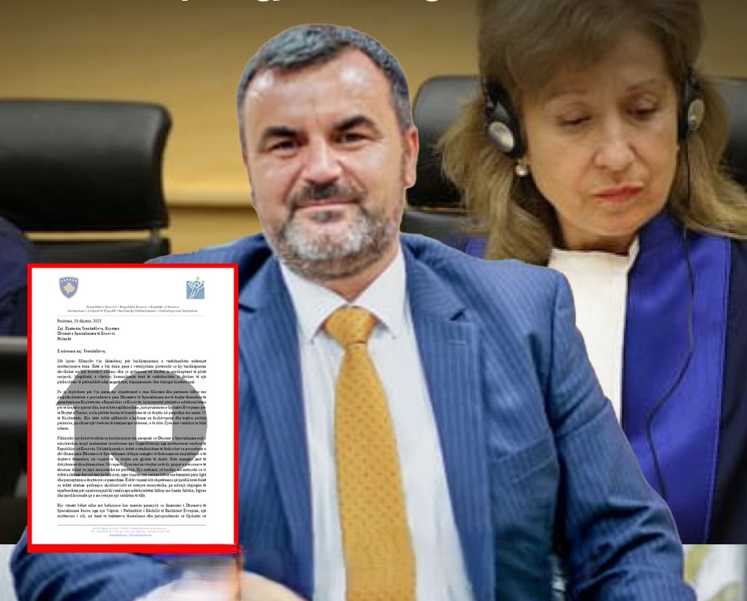
In a formal letter addressed to the President of the Specialist Chambers, Ekaterina Trendafilova, Ombudsperson Naim Qelaj warned of potential violations of Kosovo’s Constitution and international human rights standards. The letter, obtained exclusively by Kanal10, highlights what Qelaj describes as systemic procedural and human rights deficiencies.
Concerns Over Evidence and Fair Trial Standards
According to the Ombudsperson, documents allegedly issued by Serbian authorities after the war are being admitted as evidence, despite serious doubts over their legality. He also expressed concern over the use of books and publications with low credibility as evidentiary material, which he said raises questions about the reliability and lawfulness of judicial proceedings.
Qelaj emphasized that, based on preliminary assessments, the procedures before the Specialist Chambers fall short of constitutional guarantees, international human rights instruments, and the jurisprudence of the European Court of Human Rights (ECHR).
Detention Conditions and Lack of Oversight
The Ombudsperson also raised alarms over restrictions on communication, family visits, and continuous monitoring during pre-trial detention, warning that such practices may constitute serious violations of fundamental human rights.
A key concern highlighted in the letter is that the Specialist Chambers are not subject to any domestic oversight or accountability mechanisms, contributing to a growing perception of inequality before the law. Qelaj noted that all defendants prosecuted so far belong to the same ethnic group, raising questions about selective and mono-ethnic application of jurisdiction.
Procedural Imbalance and Prolonged Detention
The letter further criticizes what Qelaj describes as a significant procedural imbalance, pointing out that the court has rejected nearly all procedural and evidentiary motions submitted by the defense—a practice he said is highly unusual and risks undermining the credibility of the trials and the right to a fair hearing.
A separate section of the letter addresses extended and uninterrupted pre-trial detention, which the Ombudsperson called problematic and incompatible with international standards. He questioned the uniform assessment of a “high flight risk,” noting that all defendants voluntarily surrendered and that no concrete evidence has been presented of witness interference.
Call for Accountability and Fair Justice
In conclusion, Qelaj stressed that the letter represents a monitoring initiative rooted in institutional responsibility and constructive engagement, aimed at protecting fundamental rights and ensuring fair and impartial trials.
The Kosovo Specialist Chambers in The Hague are currently conducting proceedings against former Kosovo Liberation Army leaders Hashim Thaçi, Kadri Veseli, Jakup Krasniqi, and Rexhep Selimi. All four were arrested in 2020 and remain in detention, consistently maintaining their innocence.