In the absence of official lobbying in the United States, the President of Kosovo, Vjosa Osmani, has emerged in recent months as one of the most active figures on the international stage.
Her participation in the signing ceremony of the Board of Peace Charter for Gaza, and meetings with U.S. President Donald Trump — including handshakes and private discussions — drew international media attention. With a population of around 1.5 million, Kosovo demonstrated that active diplomacy can maintain visibility.
“This is a historic initiative with a clear vision: to bring more peace and security to the world,” Osmani said after signing the Peace Board Charter on January 22.
However, the initiative has faced criticism. Democracies like France and Germany declined participation, warning that it could undermine the UN’s role and open the door for figures like Russian President Vladimir Putin.
Even within Kosovo, reactions are divided: for some, participation represents a step toward increasing the country’s international weight; for others, it is a risky alignment alongside authoritarian regimes, including Belarus.
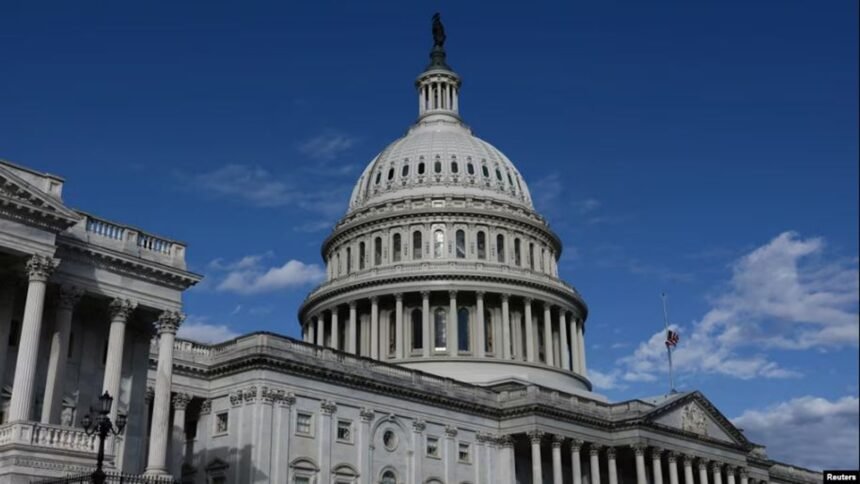
Amid this debate, another crucial issue has remained in the shadows: Kosovo’s lack of state lobbying in the U.S.
Political analyst Donika Emini notes that Kosovo has had very few active voices in Washington for nearly two years — not for lack of topics, but due to the absence of structure. Since June 2024, the country has had no active lobbying contract registered under the U.S. Foreign Agents Registration Act (FARA). Such lobbying allows foreign states to legally influence U.S. policies.
According to Emini, the lack of this mechanism weakens Kosovo’s ability to communicate its interests, as individual engagement by officials cannot replace a professional lobbying structure, especially in the U.S.
“It is truly concerning, because the U.S. does not work like the European Union. With EU countries and Brussels, bilateral relations can be managed directly through official channels and state representatives. In the U.S., everything operates through lobbying, and nothing is accidental,” Emini told Radio Free Europe’s Expose program.
Since the 1990s, Kosovo has paid multiple lobbying firms in the U.S., spending hundreds of thousands of dollars to promote its international agenda. Contracts were signed with well-known American firms such as Podesta Group and Ballard Partners.
In the past five years, under President Osmani and Prime Minister Albin Kurti, only three lobbying contracts were signed — all in 2023 — one short-term and two others that expired a year later.
Requests for clarification from the Presidency, Government, and Ministry of Foreign Affairs and Diaspora regarding Kosovo’s lack of active FARA-registered lobbying have so far gone unanswered, raising questions about strategy, planning, and institutional coordination.
In rare public comments, Foreign Minister Donika Gërvalla, now in office, said the continuation of the 2023 contracts was “being considered,” but nearly a year and a half later, this has not happened. Most of the expenditures reportedly went toward lunches, trips, and meetings in Prishtina.
Kosovo risks taking U.S. political support for granted, failing to understand the dramatic changes in the political elite there, according to Emini.
“We are not in the 1990s. We no longer have a U.S. political elite that knows the Balkans in detail. We don’t have the lobbyists, senators, or congressmen as before, who made the Balkans a political cause,” she said.
Vesko Garçeviq, professor of International Relations Practice at Boston University, says that without lobbyists providing inside information, Kosovo risks misunderstanding U.S. priorities, formulating policies that do not align with Washington’s expectations, and thus receiving limited support. In this way, Kosovo risks being “forgotten,” leaving room for others to shape the narrative.
“Serbia, in particular, has invested heavily, both financially and through connections, in building its lobbying network. If I were in the Kosovo Government, I would do the same — hire someone influential to represent Kosovo’s interests outside the official diplomatic office in Washington,” Garçeviq told Expose.
Currently, Serbia has six active FARA contracts, including lobbying before the U.S. Congress. Other regional countries have fewer: Bosnia and Herzegovina has 14 active contracts (mostly through Republika Srpska), Albania has four, while Montenegro and North Macedonia have none.
Garçeviq, a former ambassador of Montenegro to several European countries, notes that lobbying compensates for the limited diplomatic weight of a small country. Unlike large states, small countries like Kosovo and Montenegro lack significant economic, military, or strategic influence, so they do not automatically attract Washington’s attention. Continuous lobbying, he explains, helped the U.S. view Montenegro’s NATO candidacy positively and played a decisive role in its success.
In Kosovo’s current situation — with open issues with Serbia and outside NATO and the EU — lobbying in the U.S. is not just a matter of image. It is a key tool for civil security and ensuring U.S. engagement in Kosovo’s stability and defense, according to Garçeviq.
“Don’t let others shape how the U.S. approaches you. Be proactive — it also helps you understand what is happening on the other side. People you hire can give you real assessments of the situation and how it is perceived,” he said.
Emini adds that Washington’s political reality has changed significantly, with decision-making now taking place in a far more fragmented environment. The new Kosovo government, expected again under Albin Kurti, must invest in building long-term lobbying networks in the U.S., not rely on sporadic communication or official visits.
“Kosovo is a small state and survives through alliances. Even with full statehood, an army, or NATO membership, alliances are essential,” Emini says.
Relations between Kosovo and the U.S. have seen tension over the past two years, triggered by several decisions by the Kosovo government considered harmful to the Serbian community. These disputes culminated in public warnings from U.S. officials and punitive measures against Kosovo, even though the Kurti government maintained that such disagreements are part of normal dynamics between allies.
This month, Kosovo was included in a list of 75 countries whose citizens temporarily had U.S. immigrant visas suspended. The official reason: preventing abuse of U.S. social benefits. All Western Balkan countries were included except Serbia, which reportedly benefited from intensive lobbying.
In a Washington where attention is bought, earned, or lost, Kosovo’s challenge is not just maintaining friendships, but also being heard.
In the words of President Osmani after signing the Peace Board Charter: “When America leads, peace is always safer.” Whether Kosovo can turn this moment into real influence — beyond handshakes and media headlines — remains to be seen.