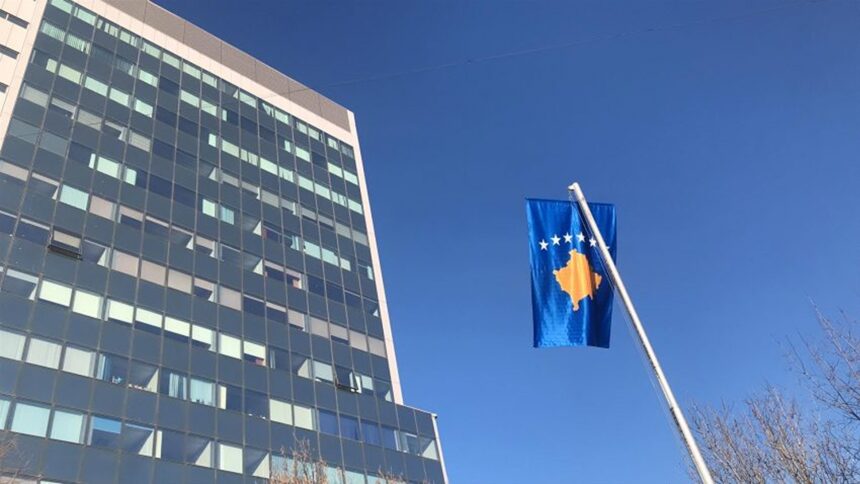
The Kosovo–Serbia dialogue is expected to be one of the main challenges for the country’s new governing institutions, with analysts predicting increased international pressure for reforms and progress in negotiations.
According to geopolitical observers, internal political developments in Serbia, as well as shifting global priorities among international partners, could directly influence both the pace and substance of the dialogue. Meanwhile, Kosovo’s new government is expected to face significant obstacles in navigating the process.
Political Instability in Serbia
University professor of political science Basri Muja said that progress in the dialogue has been difficult not only due to factors within Kosovo, but also because of Serbia’s unstable political situation, including prolonged protests and internal tensions.
“In the situation we have been in, unfortunately it has been impossible to achieve progress in the dialogue. But this time, I do not believe the responsibility lies only with Kosovo. Serbia has been facing a very unstable political situation, with massive public protests for more than a year. As a result, Serbian institutions have not been able to engage in substantial debates or meetings with partners from Kosovo,” Muja said.
He emphasized that the dialogue will remain one of the key challenges for Kosovo’s new government.
“This issue will certainly be one of the main challenges ahead. However, much depends on developments in Serbia. According to available information, parliamentary and presidential elections are expected there toward the end of the year. I do not believe Serbian institutions will engage in deep negotiations before then,” he added.
Possible High-Level Meeting in Spring
Geopolitical expert Lutfi Bilalli said that attempts for a high-level meeting between Prime Minister Albin Kurti and Serbian President Aleksandar Vučić could take place during the spring months. However, he noted that results remain uncertain.
Bilalli referred to initial signals from EU Enlargement Commissioner Marta Kos, who congratulated the formation of Kosovo’s new government while urging reforms related to EU integration. He also mentioned recent statements by EU officials emphasizing that the Kosovo–Serbia dialogue must remain a priority.
“During the spring, there may be an attempt to organize a high-level Kurti–Vučić meeting. Whether it will yield concrete results remains to be seen. Kosovo’s government faces major challenges in this regard,” Bilalli said.
He added that Serbia’s fragmented political landscape and upcoming elections could delay negotiations and potentially be used as a political tactic. EU institutions are aware of this dynamic, he noted, and may anticipate postponements due to Serbia’s internal political situation.
Broader Geopolitical Pressures
Bilalli further argued that the region has entered a highly uncertain phase regarding the possibility of swift meetings and tangible outcomes from the dialogue.
“I doubt we will see immediate results. European leaders are currently facing major challenges, primarily the war in Ukraine, as well as internal political issues within key EU member states,” he said.
Despite these obstacles, European officials are expected to attempt to push the process forward. Bilalli also suggested that a possible U.S. initiative could emerge in the spring, potentially involving a new document or framework, though details remain unclear.
As Kosovo’s new government takes office, the dialogue with Serbia remains a defining diplomatic test, shaped not only by bilateral relations but also by broader regional and global geopolitical shifts.