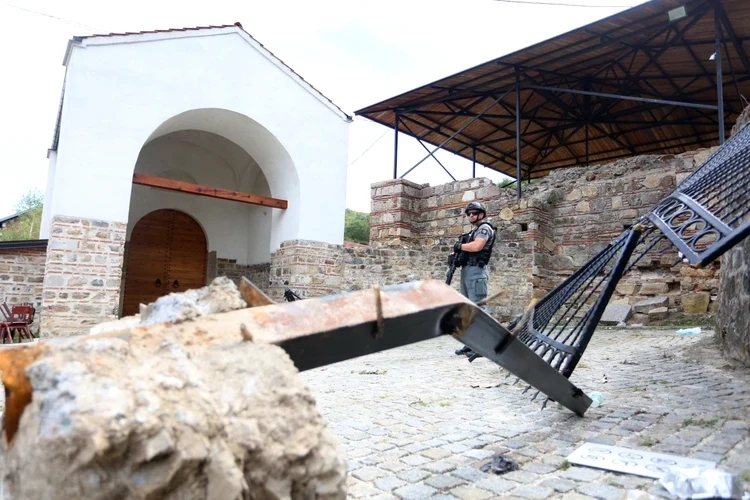
Banjska, February 19, 2026 – The Special Prosecution of Kosovo has proposed more than 160 pieces of evidence related to the three suspects currently in pre-trial detention for the terrorist attack in Banjska. The accused are Dushan Maksimović, Vladimir Tolić, and Blagoje Spasojević.
The evidence includes video recordings, location data for one of the suspects, and reports of photographs found on the defendants’ phones. Special Prosecutor Naim Abazi stated that one report from the U.S. Department of State confirms Maksimović’s location through phone tracking.
According to Abazi, the evidence contains technical and documented data from official systems such as Google and Meta, including Maksimović’s account information, IP addresses originating from Serbia, phone numbers, and location history from Google Maps and YouTube activity.
Key evidence also includes:
- Video recordings showing interactions and links among the suspects.
- Analysis demonstrating the existence of a communication network between those on trial and individuals at large.
- Photographs depicting weapons and ammunition, supporting the network connections.
Defense attorneys expressed concerns that they had not received all proposed evidence. The presiding judge, Ngadhnjim Arrni, reprimanded the attorneys, emphasizing that such claims could question their professional representation of their clients.
Some defense lawyers, including Millosh Delević and Jovana Filipović, challenged the admissibility of evidence such as phone examinations and forensic analysis detecting gunpowder on Tolić’s jacket. Other disputes involved the proposed allocation of roles among the accused.
The prosecution also considered additional evidence highlighted by the family of Afrim Bunjaku, the police officer killed during the attack, which was supported by the Special Prosecutor.
The court announced that decisions regarding a portion of the proposed evidence will be made on Friday.
This case marks a critical stage in the prosecution of the Banjska terrorist attack, highlighting the use of international cooperation and technical evidence in Kosovo’s judicial proceedings.