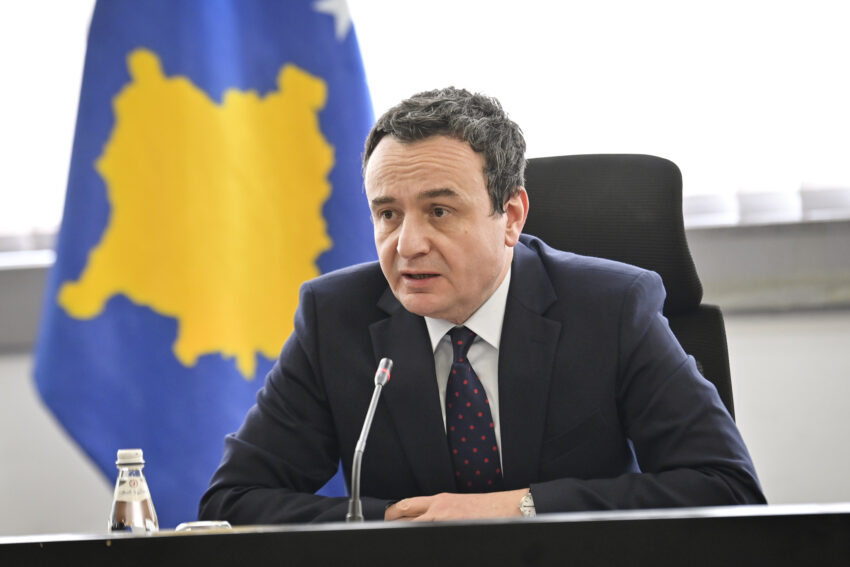
In an interview with Swiss newspaper Neue Zürcher Zeitung (Neue Zürcher Zeitung), Kosovo Prime Minister Albin Kurti announced plans to invest €1 billion in national defense, including the establishment of industrial bases such as a munitions factory in Gjakovë.
Kurti emphasized that Kosovo’s defense strategy is modeled more closely on Sweden and the Baltic states, focusing on comprehensive defense rather than aggressive military expansion. “If you have a large neighbor, you must think differently,” he said, referring to Serbia’s recent military buildup.
The Prime Minister stressed the need for a clear civilian and military framework in case of emergencies or armed conflict. In line with this, Kosovo plans to implement general security training for all citizens, particularly the youth, inspired by Poland’s programs.
Kosovo also remains committed to joining NATO, with military acquisitions from allied NATO countries, including anti-tank weapons, drones, and mobile artillery systems. Equipment from Turkey, such as Bayraktar TB2 drones, has also been included. Kurti reaffirmed Kosovo’s commitment to Western democratic values and EU integration while maintaining a healthy distance from Russia.
Addressing regional security, Kurti highlighted that within the six Western Balkan countries, no state currently has the will or capacity for interstate violence, though hybrid influence from Russia—through energy, military, and media channels—remains a challenge. “Real change depends on democratic forces within Serbia,” he added.
On domestic politics, Kurti indicated that a compromise with the opposition will be needed for the upcoming presidential election, following key government priorities including the 2026 budget and an EU growth plan worth €882 million.