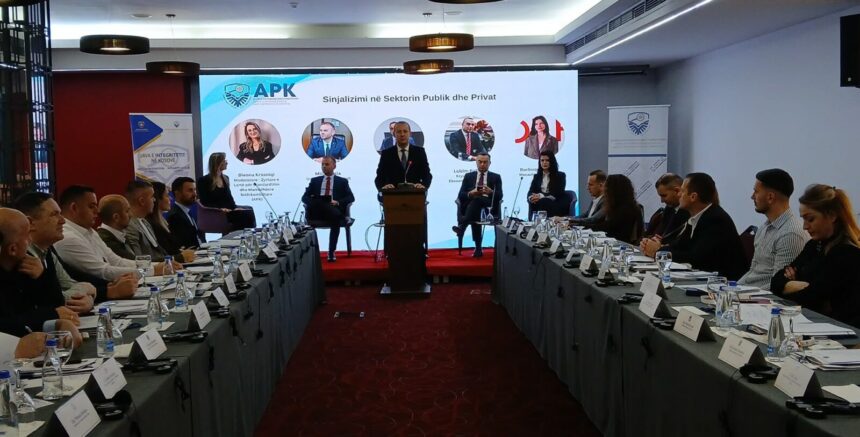
The Anti-Corruption Agency (ACA), in collaboration with the Civil Society Advisory Forum, concluded “Integrity Week” with a focus on the crucial role of whistleblowers in both the public and private sectors.
Yll Buleshkaj, Director of the ACA, emphasized the significance of whistleblowers, describing them as guardians of trust, transparency, and the rule of law. He stated:
“Whistleblowers are not merely detectives; they are courageous witnesses exercising their legal right to protect the collective interest. Their actions are not a betrayal of the institution, but the highest form of loyalty to duty, law, and citizens. Protecting whistleblowers in both the public and private sectors is essential for ensuring that public funds are not misused, services are not exploited, and nepotism is combated. This is key to restoring citizens’ trust in governance and maintaining a healthy business environment.”
Buleshkaj noted that while whistleblowing is often associated with the public sector, its protection in the private sector is equally critical. Examples include employees reporting product safety violations, officials exposing tax fraud, or economists flagging financial mismanagement, all of which contribute to safeguarding public interest and economic stability.
Milot Shala, Head of the Whistleblowing Division at ACA, highlighted the need for the public sector to serve as a model for the private sector in appointing dedicated officers to handle whistleblower reports. He added that the number of whistleblowing cases has doubled compared to last year, reflecting growing trust and utilization of the mechanism.
Lulzim Rafuna, President of the Kosovo Chamber of Commerce, stressed the importance of understanding whistleblowers’ work in the private sector, especially in a developing business environment:
“A functioning public sector with integrity is the foundation for fair competition and foreign investment. Whistleblowers play a vital role in maintaining these standards, ensuring that businesses can operate transparently and ethically, both domestically and internationally.”
The event marked the culmination of a week-long series of discussions on core pillars of governance, including integrity plans, anti-corruption measures in public procurement, gift ethics, and protection of higher education from conflicts of interest, all underlining Kosovo’s commitment to building a functional, honest, and European-standard administration.