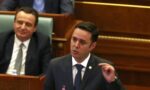
Kosovo Prime Minister Albin Kurti has called for the establishment of a special international tribunal to investigate and prosecute the killings of Bosniak civilians by snipers during the 1990s “Sarajevo Safari.” According to Kurti, Serbian President Aleksandar Vučić is alleged to have played a role, allowing snipers to shoot civilians from the hills surrounding Sarajevo for financial gain, reports KosovaPress.
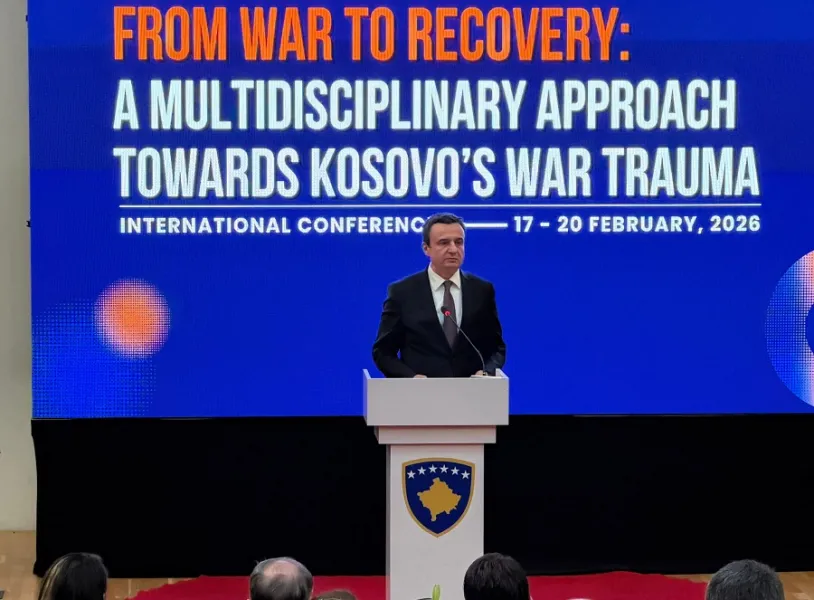
Kurti made these remarks during the second international scientific conference organized by the Institute for War Crimes Research in Kosovo, emphasizing the need for accountability for war crimes while debunking unfounded allegations about the so-called “yellow house” in Albania, claimed by some to be a site for organ trafficking by members of the Kosovo Liberation Army (UÇK).
“The so-called yellow house in Albania never existed as a site for organ trafficking by UÇK members. It is part of Serbia’s hybrid narrative against UÇK and Albania. What did exist, however, was the ‘Sarajevo Safari,’ in which, it is alleged, President Vučić participated. From the hills around Sarajevo, snipers could shoot Bosniak civilians in the besieged city in the early 1990s. To investigate and prosecute the crimes of ‘Sarajevo Safari,’ a special international tribunal would be required,” Kurti said.
Speaking about the ongoing trial of former UÇK leaders at The Hague, Kurti emphasized that the liberation war was just and necessary for Kosovo’s freedom and survival.
“It cannot and will not change a fundamental historical truth: the UÇK war was just and essential for liberty and survival, not driven by a desire for violence or power. It was a response to a repressive regime, systematic oppression, apartheid-like conditions, and denial of fundamental rights, up to the point of genocide. This process cannot undermine the liberating and anti-colonial character of our struggle, nor Kosovo’s legitimate aspiration for freedom and equality,” Kurti added.
At the conference, Atdhe Hetemi, Executive Director of the Institute for War Crimes Research in Kosovo, highlighted the event as a commitment to deepening scientific dialogue and expanding perspectives on war crimes research:
“The discussions over these three days aim to offer in-depth analysis, disciplinary approaches, and critical reflections on the long-term consequences of the war—not just as historical experience, but as a reality that continues to shape individual lives, state structures, and nation-building processes. Our conference seeks to document the past and contribute to producing internationally comparable new knowledge,” Hetemi said.
The remarks were delivered on the 18th anniversary of Kosovo’s independence, marking a day of both national celebration and reflection on the legacies of conflict in the region.