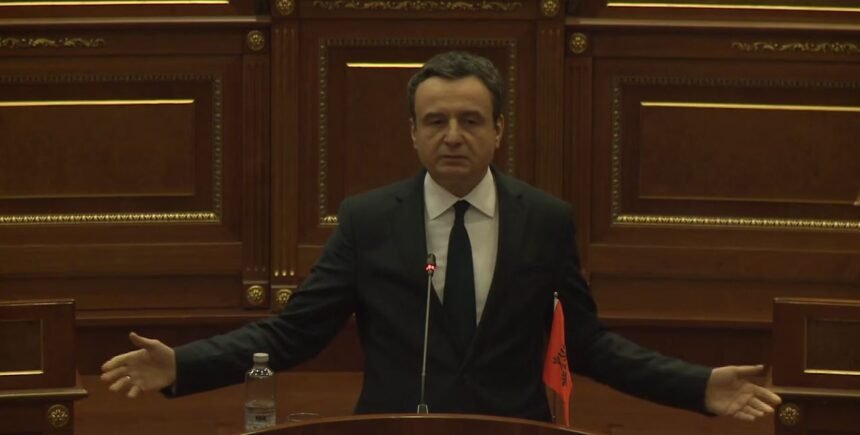
Kosovo’s Prime Minister, Albin Kurti, stated that reducing VAT and excise taxes on fuel would create a significant financial gap in the state budget. He announced that the government is preparing Inflation Package 2.0 worth €200 million to help citizens and businesses cope with rising prices.
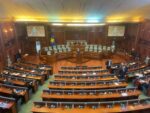
During an extraordinary session of the Assembly discussing fuel prices, Kurti emphasized that in challenging times, it is easy to seek quick solutions, but the government aims for sustainable, long-term solutions. He noted that the recent surge in fuel and energy prices has challenged even the world’s largest economies, while Kosovo has not yet faced shortages of fuel derivatives.
“In these challenging times, fuel and energy prices fluctuate constantly, and it is easy to seek quick solutions. But our duty is not to take the easiest path, but the right, useful, and sustainable one for our country. Even the largest economies in the world are challenged by this situation. In Kosovo, the effect has not been dramatic yet, as there have been no supply shortages or losses of derivatives,” Kurti said.
Kurti pointed out that proposals to reduce VAT and excise are not new. While lowering these taxes may seem like a simple solution, it is costly and uncertain in effect. He cited previous cases when VAT was reduced on essential goods and restaurants, noting that prices did not significantly decrease:
- VAT on essential goods was reduced from 18% to 8% in 2016, but prices remained largely unchanged.
- VAT reductions for gastronomy during the pandemic also did not result in lower prices.
The Prime Minister highlighted that VAT and excise are critical sources of state revenue, and removing them would create financial difficulties. He explained that cutting just 16 cents per liter in excise taxes would cost the budget around €10 million per month.
Kurti explained that the Inflation Package 2.0, valued at €200 million, aims to provide direct support to citizens and businesses, as subsidizing products like fuel does not guarantee that benefits will reach the public.