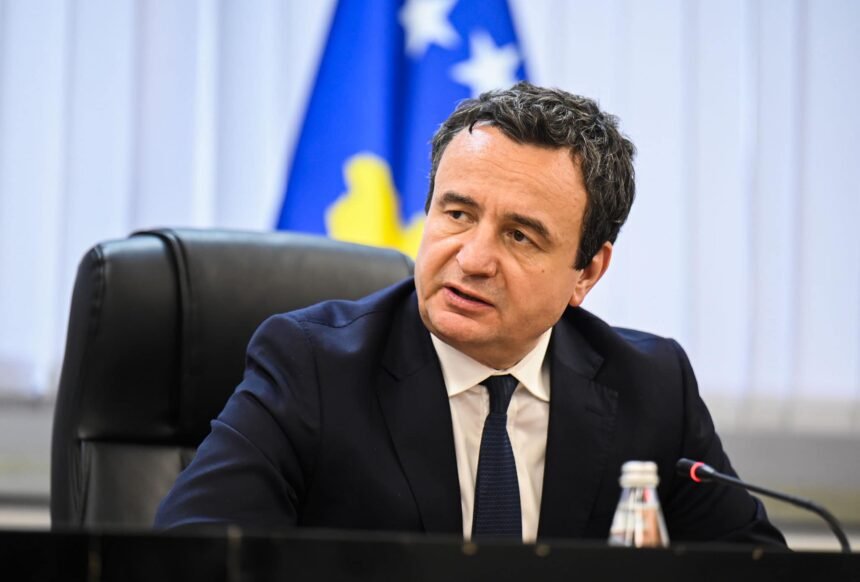
Kosovo’s security situation has significantly improved compared to previous years, while the risk posed by espionage activities is steadily decreasing, Prime Minister-in-office Albin Kurti has said, citing enhanced coordination among security, intelligence, and justice institutions.
In his first interview since the 28 December elections, Kurti told KosovaPress that intensified inter-institutional cooperation during 2024 and 2025 has produced concrete results, including arrests, detentions, and indictments in multiple espionage-related cases.
Arrests and Prosecutions Mark Progress
According to Kurti, Kosovo’s Police, the Kosovo Intelligence Agency (KIA), and the justice system have worked closely to identify and neutralize espionage networks operating within the country.
During 2025 alone, authorities uncovered several suspected espionage cases, leading to arrests and criminal proceedings. Among those detained were:
- Fatmir Sheholli, arrested in October 2025 in Prishtina on suspicion of espionage;
- Bojan Jevtić, a Kosovo Police lieutenant serving as an operational chief at the “Dheu i Bardhë” border crossing;
- Hysri Selimi, arrested in May 2025 for alleged collaboration with Serbia’s Intelligence and Security Agency (BIA);
- Jelena Đukanović, an official of the OSCE mission in Kosovo, arrested in February 2025 following months of investigation.
Several of these cases have resulted in pretrial detention and indictments by Kosovo’s Special Prosecution Office.
Hybrid Threats and Regional Destabilisation
Kurti stressed that Kosovo has faced not only direct security threats but also a sustained and organised hybrid campaign, which he described as concrete rather than abstract.
“Espionage manifests itself through sabotage, disinformation, and attempts to destabilise our political system and undermine Kosovo’s sovereignty and territorial integrity,” Kurti said.
He directly pointed to Serbia and its allies, particularly the Russian Federation, as sources of these destabilising efforts, alleging that Belgrade’s intelligence services, including the BIA, have played a central role.
Kurti noted that Serbia’s actions extend beyond conventional or kinetic threats and include coordinated hybrid warfare, aimed at weakening Kosovo’s institutions and internal stability.
Declining Risk, Continued Vigilance
Despite these challenges, Kurti said the overall risk from espionage is now lower than in previous years, largely due to improved institutional performance and accountability.
“We now understand how exposed we were in the past,” he said. “Those arrested for espionage are either in detention or have already been convicted.”
He emphasised that judicial processes in Kosovo are fair, transparent, and monitored by EULEX, reinforcing public confidence in the rule of law.
Kurti also described Kosovo as one of the most democratic countries in Southeast Europe not yet integrated into the European Union, highlighting the importance of legal integrity and institutional vigilance.
“Citizens have no reason to worry,” he concluded, “but state institutions must remain highly vigilant, because Serbia’s hybrid warfare—supported by the Kremlin—continues to pose risks to peace and security across the Western Balkans.”