Following the announcement by Jared Kushner’s company – the son-in-law of U.S. President Donald Trump – that it is withdrawing from the construction of a luxury complex in central Belgrade, the case of the former General Staff building in Serbia is not yet resolved.
The withdrawal of Kushner’s company, Affinity Partners, does not rule out the possibility of new construction plans on the site that once housed the General Staff of the Yugoslav Army.
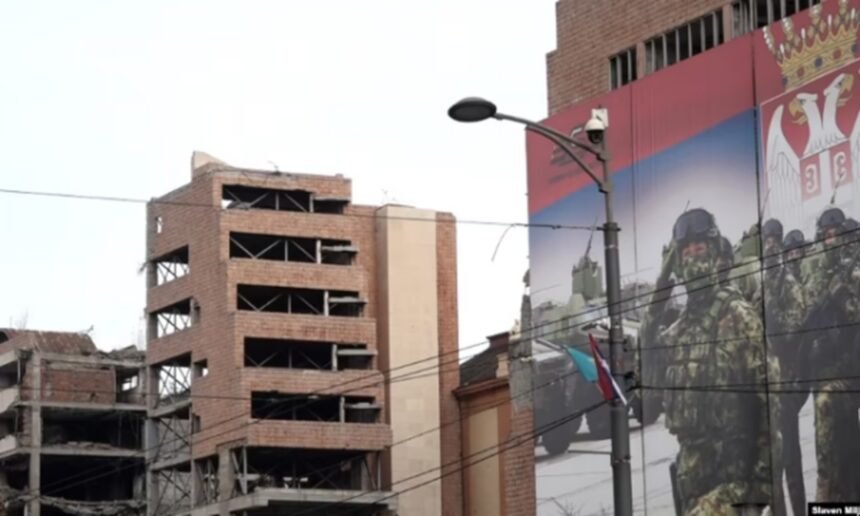
Through a special law, Serbian authorities removed the cultural heritage status from buildings damaged during the 1999 NATO bombings, paving the way for the demolition of the complex.
Official information regarding further plans is not available, but potential new investors have been mentioned publicly, including the UAE-based company Eagle Hills, which is a partner of Serbia in the “Belgrade Waterfront” project.
Serbian President Aleksandar Vučić, in his first reaction, accused all those opposed to the project of undermining a valuable investment. Demonstrators and anti-government activists, who do not support the construction, have stated – even after Kushner’s withdrawal – that they will continue their “fight.”
Experts have also responded to the project, insisting that the former General Staff complex should be restored rather than demolished.
The Organized Crime Prosecutor’s Office in Serbia has also announced that it will continue the case, having filed charges against the Serbian Minister of Culture, Nikola Selaković, for document falsification – which led to the loss of cultural heritage status for the General Staff building.
Since May 2024, when the contract with Kushner’s company was signed, authorities have faced difficulties in implementing the project.
What happens next?
Government representatives, led by the Serbian Progressive Party, have not spoken specifically about the next steps. So far, only criticisms have been voiced.
President Vučić called the project opponents “idiots,” saying that because of them, a €750 million investment failed. He also warned that he would remove the Serbian Army billboard covering the façade of one of the General Staff buildings, saying:
“Now it will be revealed so people can see how terrible it looks,” adding that it is “only a matter of time before bricks and stones start to fall.”
A few days later, the billboard was removed. Vučić also announced that he would file criminal complaints, which he said he would submit personally against “all those who participated in destroying the investment.”
He accused parts of the police and prosecutor’s office of obstructing the project.
Ongoing investigation
The news of Affinity Partners’ withdrawal came hours after the Organized Crime Prosecutor’s Office filed charges against several officials for abuse of office and document falsification in connection with the General Staff complex. Among them is the Serbian Minister of Culture, Nikola Selaković.
The Prosecutor’s Office has been investigating the case since May of this year. Goran Vasić, Director of the Republican Institute for the Protection of Cultural Monuments, allegedly admitted to falsifying documentation.
As a result, the Ministry of Culture received an initiative to remove the cultural heritage status from the General Staff buildings. Selaković repeatedly accused and insulted the Prosecutor’s Office for Organized Crime.
Commenting on the Prosecutor’s investigation, Vučić warned that he “will pardon” all those who, in his view, “are suspected of participating in financial fraud.” He also stated that there was no corruption in this project.
Following the indictment, the Prosecutor’s Office announced that it would continue its work to determine if other individuals were involved in criminal acts.
To accelerate the delayed project, Serbian authorities also used a special law. In early November, the Serbian Parliament passed a law removing the cultural heritage protection for the General Staff complex.
What are Kushner’s company’s next steps?
In response to Radio Free Europe, Affinity Partners did not specify its future steps. Nor is it clear what rights the company has now that the project has failed, as the contract between the Serbian government and the American investor has not been made public.
The company did not mention any legal proceedings against the minister nor directly explain why it withdrew from construction. The decision was made, according to them, “out of respect for the citizens of Serbia and Belgrade,” with a vision to provide “an elegant and inspiring architectural solution highlighting Serbia’s progress.”
A new partner in the project?
Serbian officials have not officially confirmed any potential new investors. Opponents of the project, however, do not rule out the possibility, often mentioning the UAE-based company Eagle Hills.
The partnership between Serbia and this investor from the UAE began in 2012, with the takeover of the Serbian Progressive Party. Since 2015, they have been involved in the construction of the luxury “Belgrade Waterfront” complex, for which the Serbian Parliament also passed a special law to expedite construction procedures along the Sava River.
Although it is not officially confirmed whether the UAE company is the potential new investor in the former General Staff complex, it is known that Eagle Hills was planned to collaborate with Kushner’s company on the project in Serbia.
What do the project opponents plan?
Anti-government demonstrators, who have organized multiple protests since the signing of the agreement with Kushner, now warn that they will continue their “fight.” They believe authorities have not abandoned their goal of building on the site.
Some opposition parties have called for the immediate repeal of the special law and the restoration of the General Staff buildings’ status as cultural heritage. Some expert associations have warned, even before the withdrawal of the American partner, that they would request a constitutional review of the special law by the Serbian Constitutional Court.
Experts remain opposed to demolition, insisting on the restoration of the modernist building, constructed between 1956 and 1963.