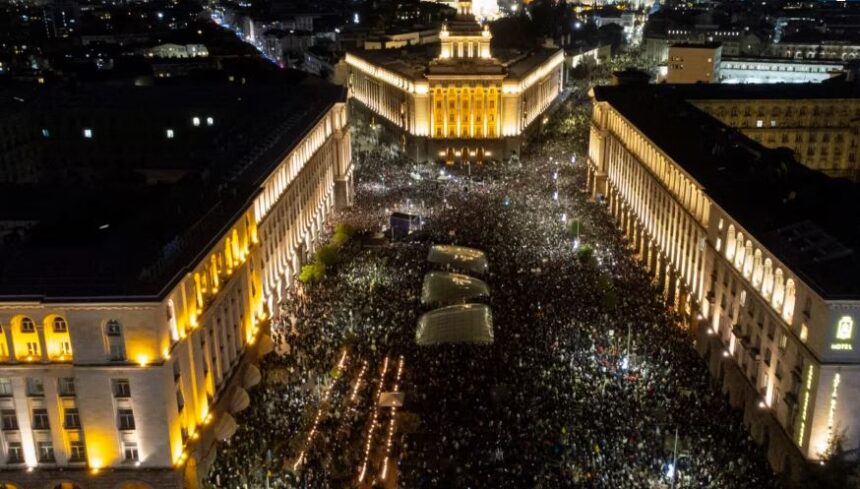
On 1 December 2025, tens of thousands of Bulgarians took to the streets of Sofia and other cities to protest the government coalition’s proposed budget, forcing the administration to withdraw it the following morning.
Protesters also demanded the resignation of the government, expressing anger over widespread corruption and economic difficulties. The Independence Square in Sofia was reportedly the most crowded since the 1990s.
Reasons Behind the Protests
The immediate trigger was a budget plan that proposed higher contributions for pensions and social security programs. While opposition parties called the protests, longstanding grievances over mismanagement of public funds, lack of transparency, and political corruption amplified the demonstrations.
Protesters criticized the government for favoring state employees with salary increases while ordinary citizens faced rising taxes and social contributions without accountability. Many voiced frustration at entrenched political figures, including Bojko Borisov, former three-time Prime Minister, and Deljan Peevski, an oligarch and legislator sanctioned abroad for corruption.
Transparency International ranks Bulgaria as the second most corrupt country in the EU, and it is also the poorest EU member, according to Eurostat. Political instability has been chronic: Bulgarians have gone to the polls seven times since 2021, struggling to form a stable government amid fractious coalitions.
Regional Impact and Mobilization
The protests were not confined to Sofia; people rallied across multiple cities and villages. Additional triggers included Bulgaria’s decision to adopt the euro from 1 January 2026, and public support for Blagomir Kotsev, recently released Varna mayor who spent months in pre-trial detention on corruption charges perceived as politically motivated.
During the evening of 1 December, minor clashes with police were reported, resulting in 10 arrests, but the majority of gatherings were peaceful.
Next Steps
Opposition parties met on 2 December to discuss further action, including the possibility of calling for early elections. Meanwhile, the government has committed to rewriting the budget from scratch after the unprecedented scale of public backlash.