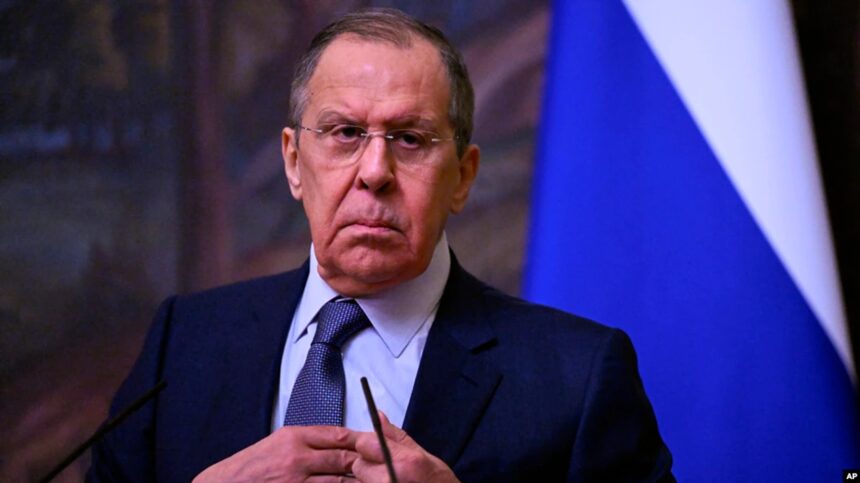
Russian Foreign Minister Sergei Lavrov stated on Tuesday that Moscow is communicating with the United States regarding the Balkans and remains open to further engagement on the region.
Speaking at a press conference, Lavrov said Russia has more opportunities to communicate with the U.S. than with the European Union on Balkan-related issues, particularly concerning Bosnia and Herzegovina and other countries in the region, according to Reuters.
“These contacts are ongoing. They have not yet produced any positive results or outcomes, but we are open to such contacts, and as far as I can judge, our American colleagues are also willing to engage,” Lavrov said.
Regional Concerns Over Russian Influence
Lavrov’s remarks come amid growing warnings from senior officials in Kosovo, including President Vjosa Osmani, who have repeatedly cautioned about the risk of Russian influence in the Western Balkans, often describing Serbia as Russia’s extended arm in the region.
Kurti: Serbia Acts Only If Ordered by the Kremlin
Kosovo’s Acting Prime Minister Albin Kurti, speaking on Tuesday during a discussion at the House of Kosovo in Davos, warned that Kosovo could face a potential threat from Serbia, citing the presence of 48 advanced operational bases along Kosovo’s borders.
“I do not believe it will happen. The chances are very small — unless the Kremlin orders something,” Kurti said, adding that Belgrade would not dare refuse instructions from Russian President Vladimir Putin aimed at destabilizing the region.
Kurti emphasized that Kosovo now has a strong military, highlighting the continuous increase in the number of Kosovo Security Force (KSF) personnel and noting that for the third consecutive year Kosovo has spent over 3% of its GDP on defense.
“They should think twice before doing anything against us. When you think twice, you do not act easily,” Kurti stated, expressing optimism for the period ahead.
Bosnia and Herzegovina and the EU’s Role
Addressing the broader region, Kurti said the situation in Bosnia and Herzegovina has become more complicated due to Republika Srpska, the Serb entity that maintains direct links with Moscow and blocks Bosnia’s progress.
He described the moment as a crucial opportunity for Brussels to prove itself by bringing Bosnia closer to EU membership.
U.S. and EU Policy in the Balkans
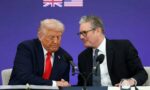
On December 18 of last year, U.S. President Donald Trump signed the National Defense Authorization Act, which explicitly states that the United States does not support any policy aimed at changing borders in the Balkans along ethnic lines.
The United States remains Kosovo’s most important strategic partner, having provided more than $2 billion in assistance since 1998, while maintaining embassies in all six Western Balkan countries.
In contrast, Russia does not recognize Kosovo’s independence and maintains only a liaison office in Prishtina.
The European Union also plays a central role in the region, as Kosovo, Albania, North Macedonia, Montenegro, Serbia, and Bosnia and Herzegovina all aspire to EU membership. Kosovo remains the only country without EU candidate status, despite applying in late 2022.
Brussels continues to act as the mediator in the Kosovo–Serbia dialogue, aimed at normalizing relations between the two sides.