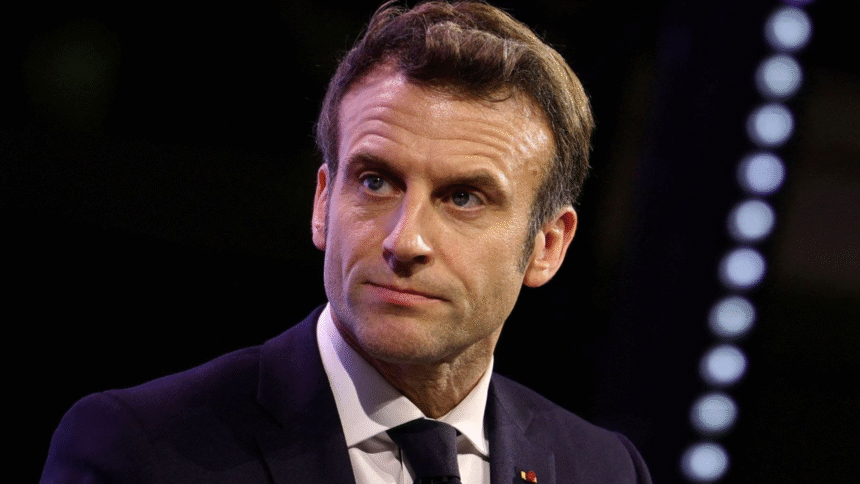
French President Emmanuel Macron is promoting a new economic vision for Europe, but he is encountering strong resistance from Germany and Italy, whose priorities for the European Union are increasingly aligned around free trade and business-friendly policies.
Macron Advocates Stronger Economic Sovereignty for Europe
Macron aims to turn the upcoming European leaders’ meeting into a “decisive moment” for the EU’s economic future, according to sources close to the French presidency.
His proposal, recently presented to European Commission President Ursula von der Leyen and European Council President Antonio Costa, focuses on strengthening Europe’s economic independence through:
- Increased public investment
- Reduced reliance on foreign trade partners
- Diversified supply chains
- Stronger support for domestic industries, including “Buy European” rules in public procurement
- Reduced bureaucracy to boost competitiveness
The French initiative reflects growing concerns in Paris about global economic competition and the need for Europe to strengthen its internal industrial capacity.
Germany and Italy Support Less Protectionist Approach
However, German Chancellor Friedrich Merz and Italian Prime Minister Giorgia Meloni are unlikely to support Macron’s strategy. Both leaders favor measures that enhance European industry but with fewer protectionist elements, aiming to avoid discouraging foreign investment and trade partnerships.
“We must make our economy competitive again,” Merz told German lawmakers in late January, noting that Europe has lagged behind the United States and China for more than a decade. He emphasized the urgency of reversing that trend.
Northern European Countries Also Voice Concerns
Macron’s “Made in Europe” concept is also facing resistance from several northern EU members, including Estonia, Finland, Latvia, Lithuania, the Netherlands, and Sweden.
In a joint statement released ahead of the summit, these countries warned that prioritizing European suppliers could discourage investment within the EU, potentially harming economic growth and global competitiveness.
Political Challenges for Macron
Macron’s efforts come at a politically sensitive time, as his presidential term is expected to end in just over a year, weakening his influence in Brussels.
EU diplomats suggest that the growing cooperation between Germany and Italy could further limit Macron’s ability to secure broad support for his proposals.
“You are only as strong in Brussels as you are at home,” one EU diplomat reportedly said, highlighting concerns about Macron’s political leverage.
Tensions with the United States Influence Debate
Macron’s initiative was partly triggered by threats from U.S. President Donald Trump to impose tariffs on EU exports if re-elected. Although tensions with Washington have recently eased, France believes the EU must remain cautious and embrace stronger “European sovereignty.”
French officials warn that trade disputes similar to those sparked by the U.S. Inflation Reduction Act could re-emerge in the future, potentially creating new economic turbulence.
Different Strategies Toward U.S. Relations
Macron’s increasingly assertive tone toward the United States contrasts with the more cautious and diplomatic approach adopted by Germany and Italy, reflecting deeper strategic differences within Europe regarding transatlantic relations.
The upcoming EU discussions are expected to highlight competing visions for Europe’s economic direction, with significant implications for trade policy, industrial development, and the bloc’s global competitiveness.