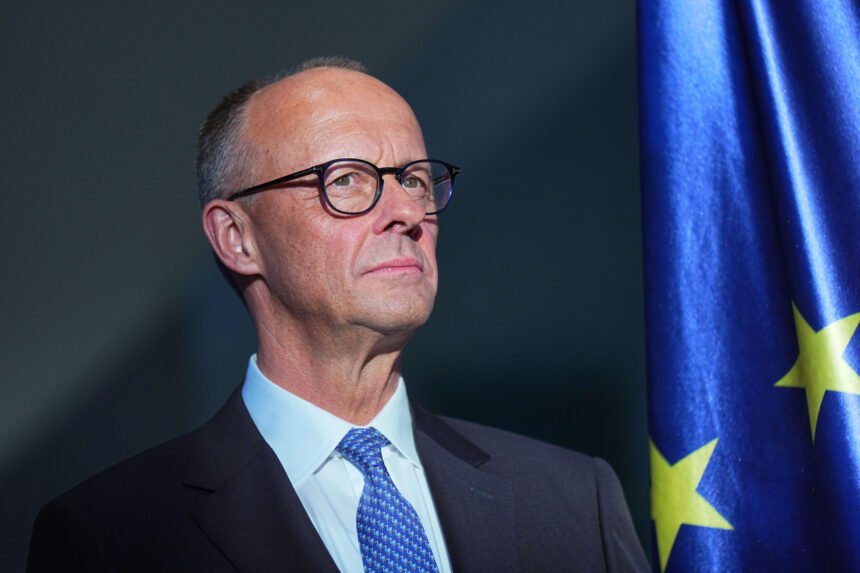
German Chancellor Friedrich Merz has called for the freezing and use of Russian assets held in Europe, arguing that the funds should be deployed to support Ukraine’s defense and reconstruction efforts as the war continues.
Speaking before the German Bundestag in his address outlining priorities for 2025, Merz painted a grim picture of the global and domestic situation, warning that Germany is facing deep geopolitical turmoil, economic strain, and a breakdown of long-standing international certainties.
“We are living through a moment of profound change,” Merz said, adding that the global order is being replaced by disorder and stressing that Germany cannot remain passive while the world is being reshaped.
“We are not a pawn of the superpowers,” he emphasized.
Ukraine War and Russian Assets
Merz focused heavily on Germany’s role in efforts to secure a just peace in Ukraine, underscoring that Russia’s war remains an illegal act of aggression.
He confirmed that Berlin recently hosted talks between Ukrainian President Volodymyr Zelensky and negotiators representing U.S. President Donald Trump, aimed at exploring a possible peace framework.
Crucially, Merz reiterated his support for using frozen Russian state assets in European banks to assist Ukraine.
“This would send a clear signal to Russia that we will use the assets deposited here to help bring this war to an end as quickly as possible,” the Chancellor said.
Approximately €210 billion in Russian assets are currently frozen within the European Union, and most of the EU’s 27 governments support using these funds to finance Ukraine’s reconstruction and the purchase of advanced military equipment.
Divisions Within the EU
Despite broad backing, several EU member states remain opposed or skeptical.
Hungary and Slovakia have openly rejected the proposal, while Italy has expressed reservations.
Belgium, which holds a significant share of the frozen Russian funds, has voiced concerns about potential Russian retaliation.
The United States has also declined to support the direct use of the assets in their current form.
Domestic Opposition in Germany
Germany’s largest opposition party, Alternative for Germany (AfD), has firmly opposed the plan. AfD leader Tino Chrupalla dismissed the proposal, stating:
“This was not and is not our war.”
Merz, however, remains among the strongest European advocates for redirecting Russian assets toward Ukraine. Whether he can secure a qualified majority in Brussels remains uncertain, and failure to do so could mark a significant political setback as his first year in office draws to a close.