More than €1 billion in international financial support for Kosovo has remained frozen for over a year, pending approval by the Assembly of Kosovo, highlighting the growing cost of political deadlock and institutional delays.
Due to the absence of newly constituted institutions throughout 2025, Kosovo failed to access €882 million from the European Union’s Reform and Growth Plan, as well as over €120 million from three agreements with the International Development Association (IDA) of the World Bank.
Funds Blocked by Parliamentary Inaction
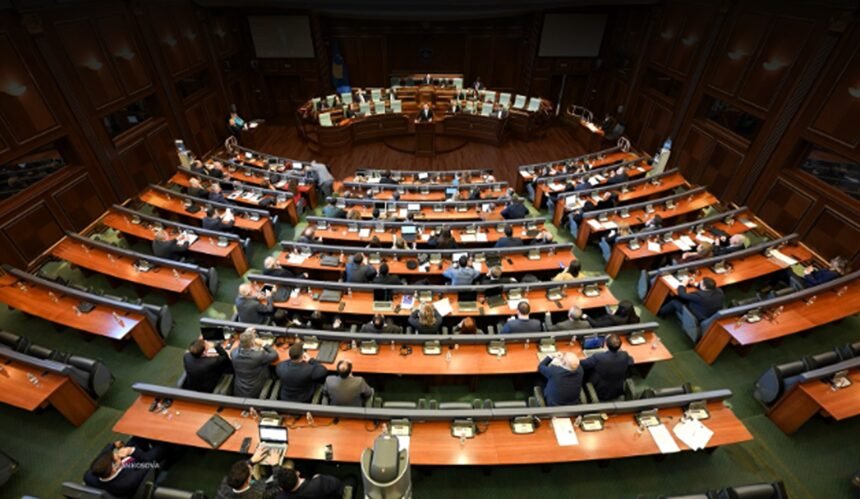
These international agreements were submitted to the eighth legislature of the Assembly in late 2024, yet ratification has stalled ever since. While the snap elections of December 28 produced a simple majority sufficient to form a government, the approval of international agreements — like the election of the president — requires at least 80 votes in the 120-seat parliament.
If the Assembly fails to elect a president even after a third round of voting, which requires at least 61 votes with a two-thirds quorum present, Kosovo could face new elections as early as spring, further delaying access to critical funds.
Political Stakes and Party Positions
The Self-Determination Movement (LVV), which won the elections, is counting on opposition cooperation to unlock the funds.
Former Assembly Deputy Speaker Albulena Haxhiu told Radio Free Europe (RFE/RL) that international agreements should not be held hostage to political bargaining over the presidency.
“International agreements should not be dragged into discussions about the president. It is essential that the Assembly fulfills its obligations. We expect goodwill from the opposition, not conditions,” Haxhiu said.
The Democratic League of Kosovo (LDK) has signaled it will not obstruct the process.
“LDK has voted for, and will continue to vote for, agreements that are in the interest of the Republic of Kosovo,” said Anton Quni, LDK vice-chair.
Meanwhile, PDK and AAK declined to comment. However, PDK leader Bedri Hamza recently stated that his party has historically supported international agreements and would continue to back initiatives beneficial to Kosovo.
What Is at Stake?
From the EU Growth Plan for the Western Balkans, Kosovo is entitled to approximately €882 million, with a reform agenda already approved, detailing how the funds would be spent.
Additionally:
- Over €90 million in World Bank budget support aims to improve public finance laws and fiscal policies.
- €21 million is allocated for building new kindergartens, training staff, and implementing a voucher scheme to expand childcare access.
- €18.6 million is designated for the development of Kosovo’s Health Information System.
Warnings of Delays and Missed Deadlines
Bekim Salihu, from the GAP Institute, warned that Kosovo has already lost valuable time.
“Growth Plan funds are valid until 2027, yet Kosovo entered 2026 without allocating them or launching reforms. The additional risk is a lack of political consensus in the Assembly,” Salihu said.
Similar warnings were issued last year by EU Enlargement Commissioner Marta Kos.
The World Bank office in Kosovo confirmed that the final deadline for one key agreement to enter into force is February 13, 2026, putting further pressure on lawmakers.
Notably, these agreements failed to pass in a November 19, 2025 session, just one day before the Assembly was dissolved, after the opposition boycotted the vote, accusing LVV of delaying institutional formation throughout the year.
A Critical Test for the New Legislature
As Kosovo’s new Assembly takes shape, the decision to approve or further delay these agreements will be a defining test of political responsibility. Failure to act risks losing vital international support, stalling reforms, and potentially shortening the lifespan of the tenth legislature.