The annual NATO report identifies Russia as “the greatest and most direct threat to our security, peace, and stability in the Euro-Atlantic region,” noting that the Kremlin “continues to test the Western military alliance, becoming increasingly reckless, including through airspace violations, sabotage, and malicious cyber activity.”
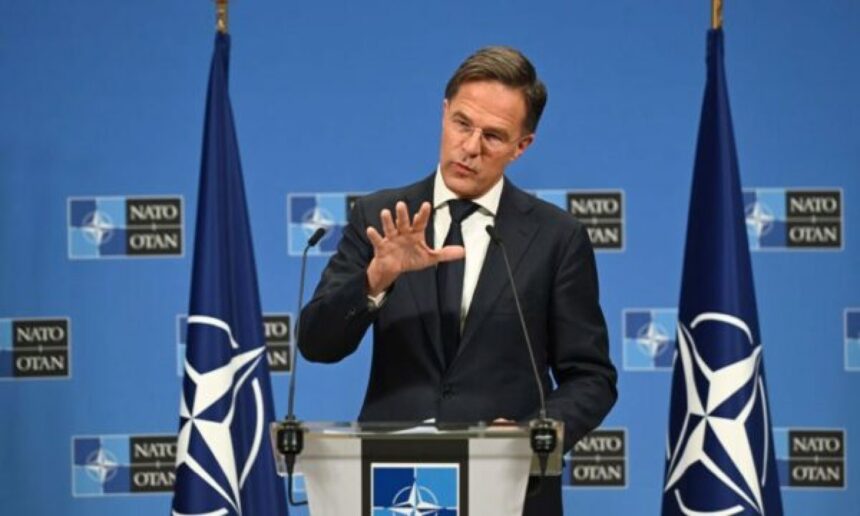
NATO Secretary General Mark Rutte presented the annual report, stating that Russia is likely to target energy infrastructure if Moscow ever attacks NATO.
“Russia remains the largest and most dangerous security threat in the Euro-Atlantic region. Over the past year, Russia has sought to test our security and challenge our societies, whether through airspace violations, sabotage, malicious cyber activities, political interference, or informational threats. NATO’s response to these reckless provocations, from Russia or others, has been clear, swift, and decisive,” Rutte said at a press conference.
The report reviews NATO’s key findings and achievements in 2025 and emphasizes that “Russia’s war of aggression against Ukraine has shown that energy is likely to be a primary target in any attack against NATO.”
The document also notes that “NATO is drawing lessons from Ukraine while intensifying exercises, training, and coordination to protect critical energy infrastructure,” referring to a military exercise in September that tested the alliance’s energy security and clarified what is required to ensure supply security.
Western Balkans: A Strategic Region for NATO
The report highlights that the Western Balkans is a region of strategic importance for NATO.
Regarding the region, NATO’s presence in Kosovo is deemed crucial for the stability of the entire Western Balkans. Since 1999, NATO’s peacekeeping mission in Kosovo, KFOR, has worked to maintain a safe environment for all communities and freedom of movement.
The report also stresses the importance of cooperation with the European Union, the United Nations, and other international actors.
The normalization of relations between Kosovo and Serbia is considered essential for the region.
“NATO continues to support the normalization of relations between Prishtina and Belgrade, particularly through the EU-mediated Prishtina-Belgrade dialogue, which is key for building lasting peace in the region,” the report states.
In reference to Bosnia and Herzegovina, the document highlights that the approval of the country’s first Individual Partnership Program in October, along with the delivery of the first support package under the initiative to provide strategic advice, training, and practical assistance for partner countries, “marked key turning points” in relations between Sarajevo and the alliance.
NATO’s increased presence in Bosnia and Herzegovina, through its headquarters in Sarajevo and the Political Engagement Support Unit, continues to provide local-level support, focusing on protection and security.
“NATO’s support for the EU-led operation EUFOR Althea, under the ‘Berlin Plus’ agreement, has helped maintain a safe and stable environment in Bosnia and Herzegovina,” the report adds.
Regarding Serbia, the annual report notes that contacts with the country have continued on regional matters and the initiation of future military cooperation initiatives.
NATO Member States Increase Defense Spending
A large part of the report focuses on defense spending, a key priority of U.S. President Donald Trump.
According to the report, European NATO members and Canada invested a total of $574 billion in defense in 2025, representing a 20% real-term increase compared to the previous year.
“Maintaining this key trend will be a priority in the coming years. For a long time, European allies and Canada relied too heavily on the U.S. military. We did not take enough responsibility for our own security. But there is a real shift in thinking, a collective recognition of our changed security environment,” Secretary General Mark Rutte stated, noting significant progress.