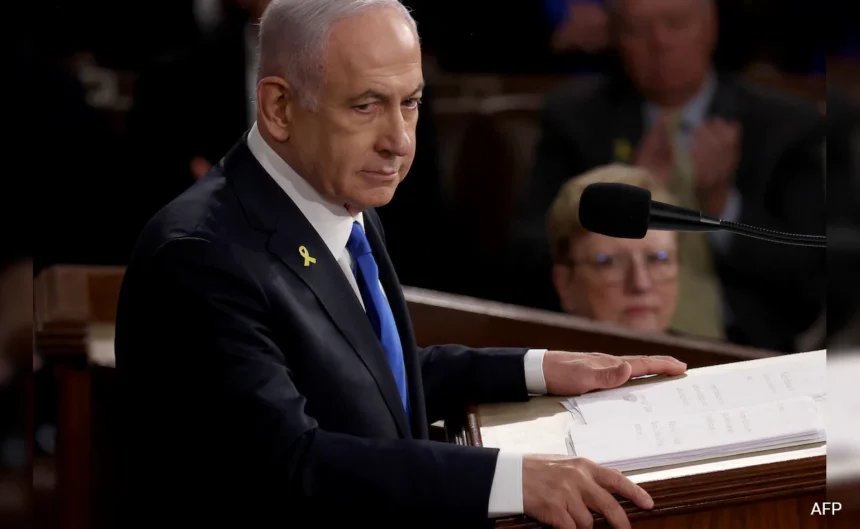
Israeli Prime Minister Benjamin Netanyahu announced that Israel and Hamas are expected to enter the second phase of their U.S.-brokered ceasefire “very soon,” contingent on the return of the remains of the last hostage held in Gaza.
Netanyahu made the remarks during a visit from German Chancellor Friedrich Merz, his first trip to Israel as head of state, which included a visit to the Yad Vashem Holocaust Memorial. The leaders discussed the situation in Gaza, acknowledging stark differences in approach but emphasizing a commitment to maintaining strong bilateral relations.
Chancellor Merz acknowledged that Israeli military operations in Gaza had placed Germany in a “number of dilemmas,” stressing that Israel, like all nations, must be held accountable under international law. He called for Germany to set an example in addressing the humanitarian crisis, while also affirming Israel’s right to self-defense against Hamas attacks.
Merz underscored the urgent need for diplomacy and expressed cautious optimism that a sustainable peace in Gaza remains possible. Regarding governance in the territory, he stated unequivocally that Hamas cannot have a role in Gaza, adding that the enclave must no longer pose a security threat to Israel.
The second phase of the ceasefire is expected to tackle more complex issues, including the deployment of international stabilization forces, formation of a technocratic Palestinian administrative committee in Gaza, the gradual withdrawal of Israeli troops, and discussions on the disarmament of Hamas.
Netanyahu also announced plans to meet with U.S. President Donald Trump later this month to coordinate further steps, highlighting Washington’s ongoing role in mediating the fragile truce.
As both sides prepare for the next stage, analysts warn that the real test of the ceasefire will hinge on Hamas’ willingness to comply with disarmament discussions and Israel’s ability to provide humanitarian access without exacerbating tensions.