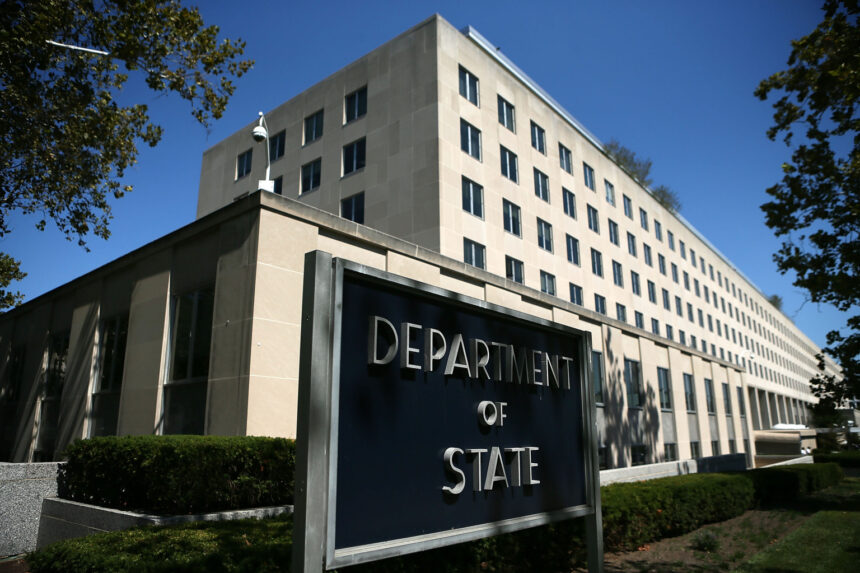
The United States administration is approaching a critical deadline for implementing the Western Balkans Democracy and Prosperity Act, which places Montenegro at the forefront of American anti-corruption measures, reports Dan.
Under the provisions of the law, integrated into the 2026 National Defense Authorization Act (NDAA) and published on the U.S. Congress website, the White House and State Department were required to submit detailed initial reports to Congress by mid-March. For the Montenegrin authorities, these reports are more than a bureaucratic formality—they represent the first step toward the public release of updated sanctions lists targeting individuals and entities involved in high-level corruption or obstructing judicial reforms.
The reports are expected to include lists of sanctioned individuals and organizations deemed responsible for undermining stability, engaging in high-level corruption, or obstructing democratic processes in Montenegro. This March deadline is seen as critical for the country’s political and business elite, as it marks a shift from declarative support to legally binding measures.
The law, passed in December 2025, was a direct response to Washington’s assessment that corruption and harmful foreign influence are major barriers to development in the Western Balkans. It requires the U.S. President to compile a list of individuals involved directly or indirectly in corrupt practices, misappropriation of public funds, or the weakening of institutional systems within three months.
The new sanctions include automatic blocking of any funds held in U.S. financial institutions by those on the list, as well as strict visa bans. The State Department is also required to provide an assessment of how effectively Montenegrin authorities have acted to strengthen judicial independence and transparency in public procurement.
Although the initiative for the law began in 2023 with Senators Jeanne Shaheen and Roger Wicker, it only gained full legal authority when incorporated into the NDAA at the end of last year. This elevated Montenegro’s stability to the level of a U.S. national security priority. Unlike previous executive orders, the law is now codified, meaning that future changes in the White House cannot easily suspend these measures without Congress’s approval. Montenegro is cited in the documentation as a partner that must show concrete results in combating organized crime to maintain U.S. support, including development funding.
Of particular interest to the Montenegrin public are the names on the new sanctions lists. According to Washington sources, the upcoming wave will target the “financial arms” of political power—businessmen and companies that act as fronts for money laundering and the maintenance of corrupt systems. The mechanism is intended to guide Montenegro’s prosecution service, ensuring that U.S. sanctions are not merely symbolic but also incentivize domestic institutions to take legal action against high-ranking officials.
Previously sanctioned individuals include Svetozar Marović, former high-ranking DPS official, who in April 2022 was targeted by the U.S. Treasury Department for corruption related to Budva. In November 2023, businessman Miodrag Daka Davidović was added to the U.S. sanctions list due to corruption and alleged malicious Russian influence in the Western Balkans. In September 2025, the State Department restricted entry to the U.S. for former Budva Mayor and MP Milo Božović, and former Supreme Court President Vesna Medenica, citing significant corruption that facilitated drug trafficking.
These actions demonstrate that the U.S. sanctions lists are not merely symbolic—they directly impact Montenegro’s political, judicial, and business elites, signaling a more assertive approach in combating corruption and strengthening governance. With the March deadline now passed, diplomatic and business circles in Podgorica are eagerly awaiting the U.S. announcements, which could significantly reshape the country’s political dynamics ahead of upcoming court proceedings and reform efforts.