A fresh escalation in tensions between Belgrade and Zagreb has reignited concerns about political stability and European integration in the Western Balkans, following the cancellation of this year’s Brdo-Brijuni summit.
The decision to call off the meeting was made by Croatian President Zoran Milanović, who cited recent statements and actions by Serbian President Aleksandar Vučić as being incompatible with the goals of the regional initiative.
According to Milanović’s office, Vučić’s rhetoric has undermined inter-state relations and posed a risk to peace and stability in Southeast Europe. The move effectively halted a key regional platform designed to foster dialogue and cooperation among Western Balkan leaders.
Vučić responded by downplaying the importance of the summit, stating that his presence was unnecessary and suggesting that Croatia could instead host leaders from Kosovo and Albania. He added that visiting the Jasenovac Memorial Site held greater significance for him.
Political analysts argue that much of the rhetoric exchanged between Serbia and Croatia reflects domestic political strategies rather than genuine foreign policy disputes. Arsen Bauk of Croatia’s Social Democratic Party noted that such exchanges are often part of internal political dynamics, particularly appealing to right-wing voters who respond positively to tougher rhetoric toward neighboring countries.
Experts also point to a pattern of what they describe as a “controlled conflict,” in which tensions are deliberately maintained at a level that mobilizes domestic support without significantly endangering broader political or economic interests. Bojana Selaković from Serbia’s National Convention on the EU emphasized that this dynamic benefits ruling political actors in both countries, even as it undermines regional cooperation.
Despite the sharp rhetoric, economic and social ties between the two countries remain active, with ongoing movement of workers and tourists. However, observers warn that symbolic setbacks—such as the cancellation of the Brdo-Brijuni summit—carry significant weight.
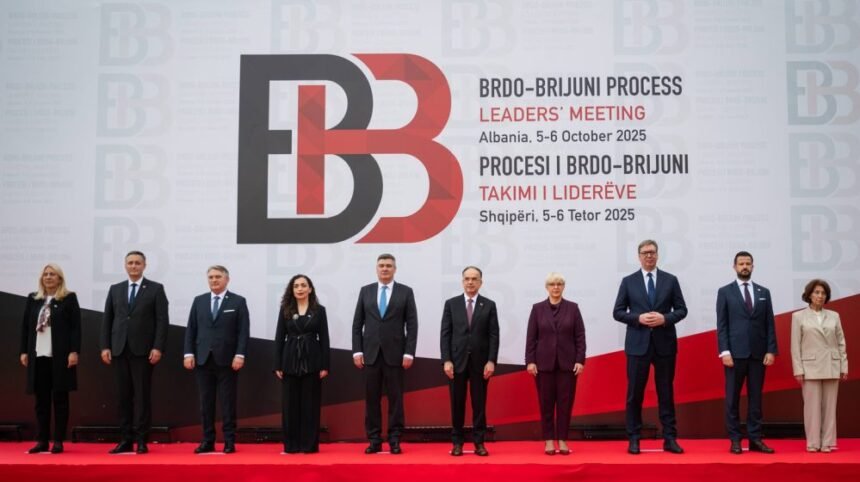
The Brdo-Brijuni Process, launched in 2013, has served as an important platform for dialogue among Western Balkan leaders and a mechanism to support their path toward European Union integration. Its suspension signals a troubling slowdown in regional cooperation efforts.
Analysts agree that the biggest casualty of the renewed tensions is not either political leadership, but the broader vision of stability and EU integration in the Western Balkans.