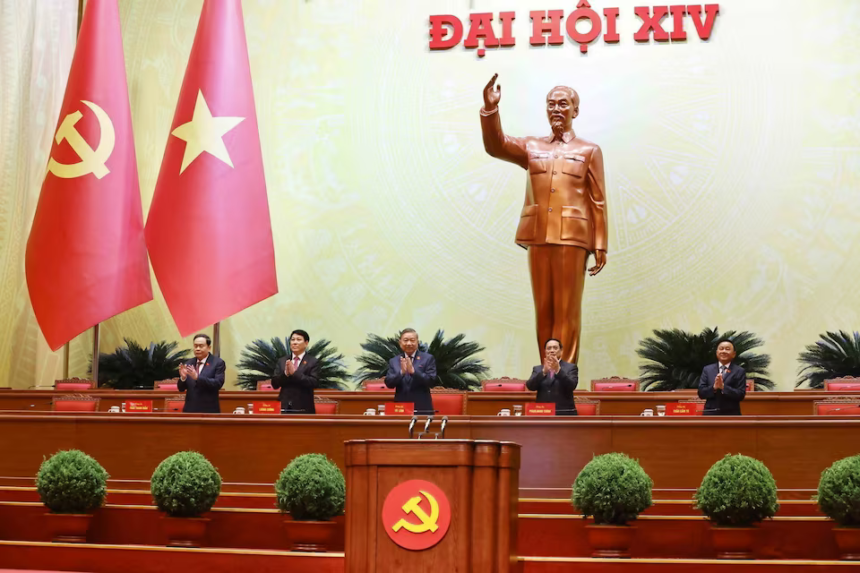
Delegates attending the Communist Party of Vietnam Congress, which began on Monday in Hanoi, have been subjected to exceptionally strict security measures, including no mobile phones, no internet access, and restricted accommodation, according to Reuters, citing informed sources.
Approximately 1,600 delegates, representing 5.6 million party members nationwide, were issued Samsung tablets with intranet-only functionality, allowing access solely to internal documents. Internet connectivity and mobile phone networks were blocked at the congress venue and surrounding areas.
The week-long congress, held once every five years, will determine Vietnam’s top leadership for the remainder of the decade, with current party chief To Lam seeking reconfirmation and expanded authority.
According to sources, delegates were prohibited from using personal mobile phones, and from Tuesday onward, phones were not permitted inside the congress at all. Even outside the venue, the cellular network shutdown rendered mobile communication effectively unusable.
Delegates were also required to stay in designated accommodations throughout the congress, including those residing in Hanoi, as part of tightened control measures.
The preparatory session took place in a red-carpeted conference hall, where party leaders appeared beneath a large statue of Ho Chi Minh, flanked by images of Karl Marx and Vladimir Lenin. During the week, delegates will vote to select a 200-member Central Committee and approve the party’s official congress resolution.
Journalists covering the event are also subject to strict limitations. Media guidelines prohibit reporters from carrying mobile phones. While laptops are permitted, they may connect only to the event’s internal network.
Foreign journalists were explicitly instructed that they “must not cause any negative impact on the image or reputation of Vietnam, its senior leadership, or its delegates in any form,” according to guidelines issued by Vietnam’s Ministry of Foreign Affairs.
Even by Vietnam’s own standards—where the one-party state tightly controls information—the measures are viewed as extraordinary, underscoring the political sensitivity and high stakes of the congress.