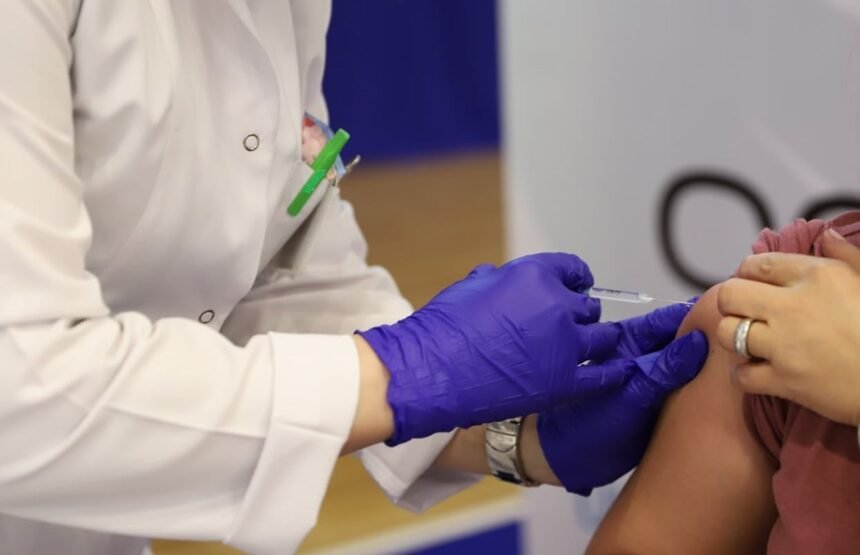
The closest tool humanity currently has to an HIV vaccine has entered the market — but according to new data, fewer than one in ten of the doses required to alter the trajectory of the pandemic will reach the people who need them most, The Independent reports.
Under an agreement between pharmaceutical company Gilead and international donors, two million people will receive the long-acting injection lenacapavir within three years — roughly 666,000 per year. According to Dr. Andrew Hill of the University of Liverpool, this could prevent up to 165,000 infections, but he warns that “it is nowhere near enough.”
His research shows that if 10 million people a year received the injection, up to half a million infections could be avoided and the world could genuinely move toward ending HIV transmission.
The situation is worsened by deep cuts to global funding — particularly from former U.S. president Donald Trump’s administration — which have weakened prevention programs worldwide. This makes lenacapavir even more critical.
“To simply compensate for the damage caused by these cuts, we believe providing lenacapavir to 10 million people annually is the minimum — and ideally it should be much higher,” Hill said.
He urged wealthy countries, including the United Kingdom, to contribute to a $400 million fund that would expand access to lenacapavir without undermining other essential HIV programs such as testing.
In the United States, a cycle of lenacapavir costs about $28,000, but Gilead has announced it will sell the drug at zero profit to low-income countries. Distribution in these regions will be financed through the PEPFAR program and the Global Fund. Hill’s research has helped reduce costs in poorer nations to just $40 per person per year.
Gilead stated that supplying the drug to 2 million people by 2028 is “the first step,” as licensed manufacturers begin large-scale production.
“We are prioritizing countries with the greatest need and working toward long-term solutions that will reach millions more,” a spokesperson said.
Anne Aslett, CEO of the Elton John AIDS Foundation, cautiously welcomed the development. She emphasized that the delivery of doses to Eswatini at the same time they become available in the U.S. is “unprecedented.”
In the past, Southern African nations often waited more than a decade to access antiretroviral drugs already available in the U.S. and U.K.
“As we stand on the cusp of new technologies, long-acting injections like lenacapavir are closer to a vaccine than anything we’ve had before,” Aslett said.
However, a dramatic drop in funding poses a major threat.
High-risk groups — young women and girls, the LGBT+ community, and sex workers — are often excluded from prevention programs. The U.S. previously funded most of the global supply of oral PrEP, but massive gaps have now emerged.
“If these vulnerable communities are left out, we cannot stop the epidemic,” Aslett warned.
Organizations are now investing in innovative delivery methods, including drones to transport medicines and test kits — models already in use across Africa and now inspiring new pilot programs in the U.K., such as a digital scheme in northeast London that provides PrEP medication without requiring a clinic visit.
Mike Podmore, director of STOPAIDS, said British contributions are not just humanitarian aid, but an investment in the country’s own economy and health. He noted that the UN’s medicine-access agency, Unitaid, has invested roughly £250 million in British universities over the past decade.
The U.K. also aims to end new HIV infections by 2030 — a goal for which lenacapavir could play a significant role, just as it can in low-income countries.