Hungarian Prime Minister Viktor Orbán has sharply criticized the European Union over what he described as the unfair treatment of Serbia, calling the country a key state in the Western Balkans whose EU accession process has been unjustly stalled.
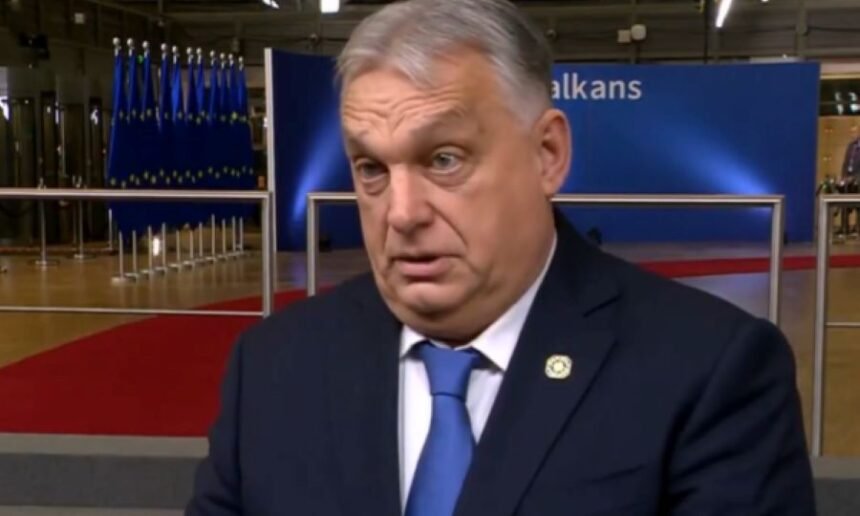
Orbán made the remarks on Wednesday during the EU–Western Balkans Summit in Brussels, which Serbia boycotted. In the absence of Serbian President Aleksandar Vučić, Orbán — known for his close political ties with Belgrade — spoke out in defense of Serbia’s position within the enlargement process.
“Unfair and Unacceptable” Treatment
“Serbia is the key country of the Western Balkans, yet its integration has not moved even a single step for years,” Orbán said.
“The way the European Union has treated Serbia is unfair and shameful. It is totally unacceptable.”
Orbán placed responsibility for the stagnation squarely on the EU, arguing that Brussels has failed to deliver tangible progress despite repeated commitments.
Enlargement Process Called a Failure
According to the Hungarian prime minister, the EU enlargement process over the past four years has been a “complete failure.” He pointed to Serbia’s lack of progress, North Macedonia’s minimal advancement, and the broader stagnation of the Western Balkans as evidence.
Despite this, Orbán stressed that the region remains strategically vital for the European Union, describing the Western Balkans as a “gold reserve” for Europe’s future.
Serbia’s Role in Migration Control
Orbán also highlighted Serbia’s role in protecting Europe from irregular migration, calling it a frontline state in managing migration flows into the EU.
He reaffirmed that Hungary will continue to support Serbia’s efforts to advance toward EU membership, positioning Budapest as one of Belgrade’s strongest allies within the bloc.
Statement Shared by Hungary’s EU Mission
The comments were later shared by Hungary’s mission to the European Union on social media platform X, underscoring Budapest’s ongoing diplomatic backing of Serbia at the European level.
The remarks come amid renewed tensions between Brussels and Belgrade, as well as broader debates over the credibility, pace, and political conditions of EU enlargement in the Western Balkans.