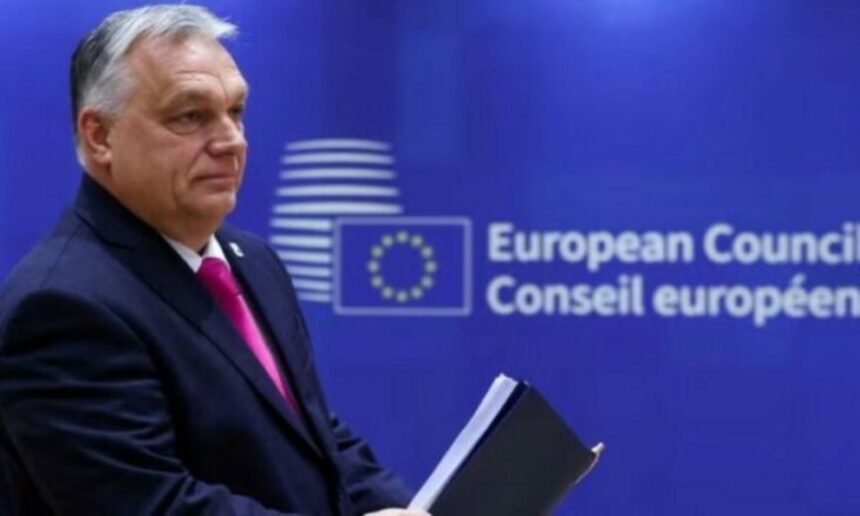
Hungarian Prime Minister Viktor Orban has escalated his election campaign by manufacturing external threats, particularly related to Ukraine, in an apparent attempt to divert attention from corruption, nepotism, and economic difficulties ahead of the April 12 elections.
Orban and his Fidesz party have portrayed Ukraine as a “mafia-led state”, framed Brussels as a “hostile entity” seeking to raise taxes in Hungary and reduce troop contributions, and claimed millions of illegal migrants are targeting Hungarian borders due to Middle East conflicts. Despite these claims, polls show the opposition Tisza party, led by Peter Magyar, is emerging as a potential victor.
Oil Pipeline Dispute Heightens Tensions
The immediate pretext involves a supposed Ukrainian oil blockade. Following Russian airstrikes on the Druzhba pipeline near Brody, western Ukraine, which halted oil flows to Hungary and Slovakia, Orban has accused Ukraine of intentionally preventing repairs, while Ukrainian President Volodymyr Zelenski cited security concerns hampering repair crews.
Orban has used the dispute to veto a €90 billion EU aid package for Ukraine, despite previously supporting it. His campaign has portrayed Zelenski alongside EU leaders Ursula von der Leyen and Manfred Weber, implying they are exploiting Hungarian funds to finance the war. Posters echo a previous anti-Soros narrative, now targeting Zelenski with the slogan:
“Let’s not let Zelenski leave laughing!”
Orban has openly denounced Ukraine as an “enemy” and dismissed it as a “hollow eggshell” incapable of independent existence before the 2022 conflict.
Russian Support and Propaganda
Orban staged a campaign event with Vladimir Putin, coinciding with the release of two Hungarian minority Ukrainian prisoners captured by Russian forces. The prisoners were flown to Budapest on a Hungarian government plane, and the event was publicly posted on social media, despite international law restrictions requiring Ukraine’s consent.
Zelenski’s Warning and Rising Tensions
In response, Zelenski issued a veiled warning against blocking EU aid, implicitly addressing Orban, though it is unclear whether it was a serious threat. Hungarian media quickly framed the statement as an “attack on the Hungarian nation.”
Meanwhile, seven Ukrainian Oschadbank couriers were briefly detained in Hungary while traveling from Austria with official funds. Hungarian authorities suggested possible ties to the Ukrainian mafia, while Ukrainian officials accused Hungary of “hostage-taking and state terrorism.” The couriers were eventually released, but the incident further escalated tensions during Orban’s campaign.
The series of maneuvers suggests Orban is leveraging external crises to undermine the opposition and strengthen his political position ahead of the elections.