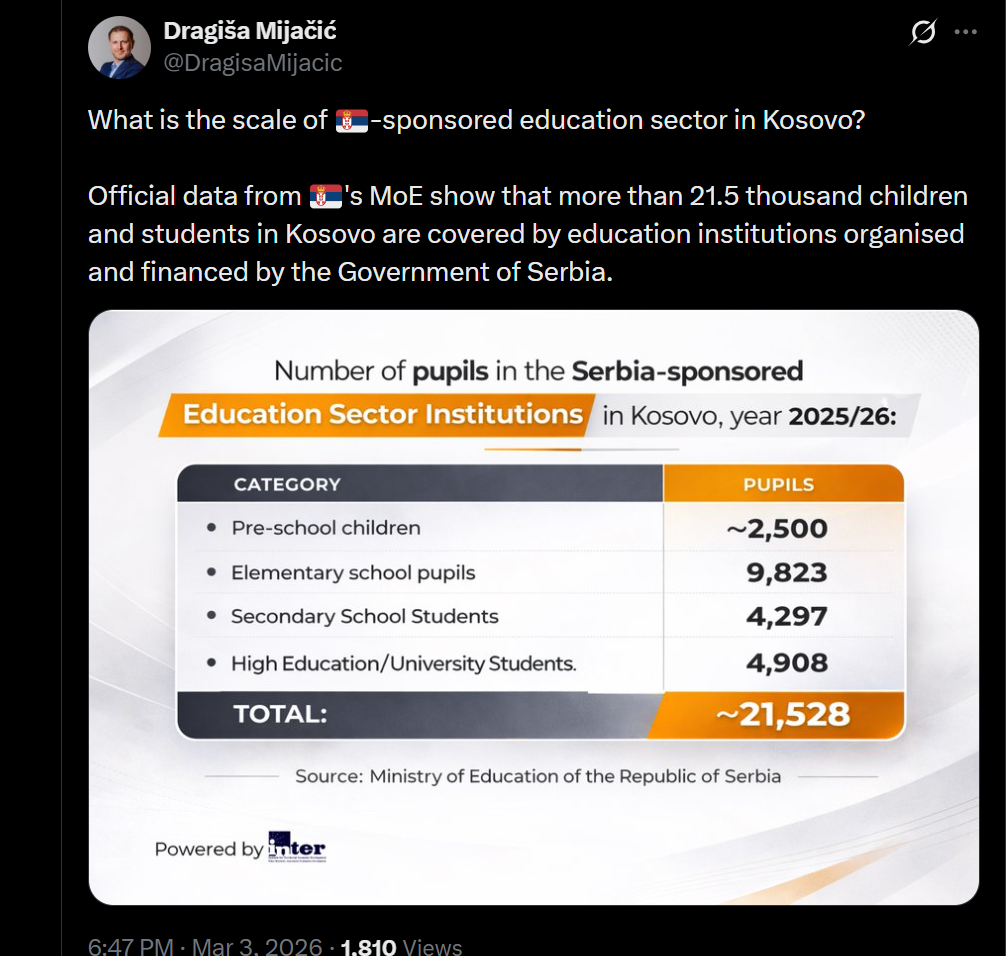
On the surface, the argument over Serbia-funded schools in Kosovo appears straightforward. More than 21,500 students—from preschool through university—attend institutions “organized and financed by the Government of Serbia,” according to Serbian policy advocate Dragiša Mijačić. Closing these schools, he warns, would endanger the Serbian community and potentially destabilize the Western Balkans.
Yet a closer examination reveals a much deeper issue: the debate is not primarily about access to education but about sovereignty, parallel administration, and unfinished state normalization.
Schools Outside Kosovo’s Legal Framework
Serbia-funded schools in Kosovo operate entirely outside Kosovo’s constitutional authority:
- Teachers are paid directly from Serbia’s budget.
- Curricula are approved by Serbia’s Ministry of Education.
- Diplomas are issued by Serbian universities.
Administratively, this network functions as an extension of Serbia’s public administration within Kosovo. It is not simply a linguistic or cultural accommodation, as is common for minority education systems across Europe. Instead, it represents a parallel state apparatus, maintaining public-sector employment and bureaucratic control linked to Belgrade rather than Pristina.
Minority Rights Already Protected
Kosovo’s legal framework provides robust protections for its Serbian community, including:
- Education in the Serbian language.
- Nationwide official status for the Serbian language.
- Administrative autonomy for Serb-majority municipalities.
- Constitutional guarantees for cultural and educational rights.
In other words, Serbian-language education already exists within Kosovo’s state system, meaning the debate is not about whether children can learn in their mother tongue, but about which government administers the institutions.
Numbers Reveal Political Significance
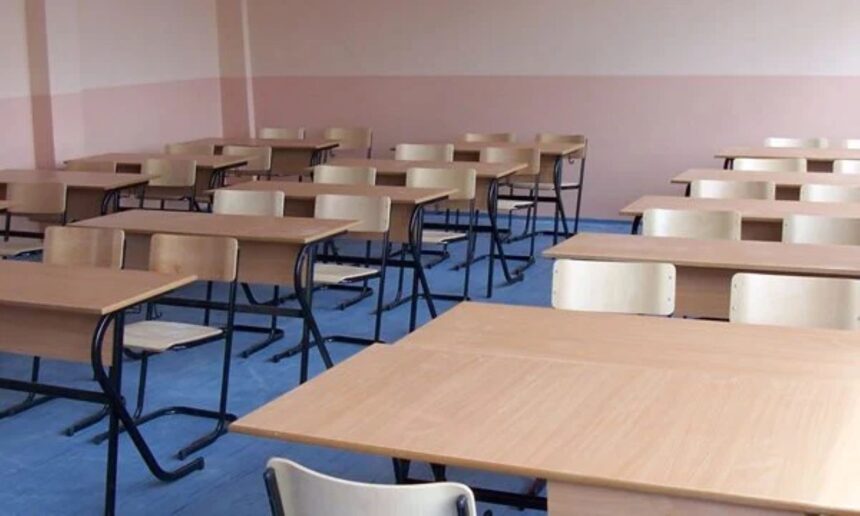
The very figures Mijačić cites highlight the political challenge. 21,500 students, along with thousands of teachers and staff funded directly by Belgrade, constitute a significant parallel administrative presence. These schools are not just classrooms; they are instruments through which Serbia maintains a degree of sovereign authority inside Kosovo, nearly two decades after the war.
Brussels Agreements and Unfinished Integration
The 2013 Brussels Agreement, mediated by the EU, was intended to dismantle Serbia’s parallel structures and integrate them into Kosovo’s institutions. Successes in policing and the judiciary show that integration is possible. Education and healthcare, however, remain the last sectors where parallel authority persists, challenging the fundamental premise of a unified constitutional order.
Stability vs. Sovereignty
Arguments framing Serbia’s schools as essential to regional stability oversimplify the issue. Minority rights frameworks across Europe guarantee access to education, language, and culture, but they do not allow foreign governments to exercise administrative control inside another sovereign state. Maintaining Serbia’s parallel system undermines Kosovo’s sovereignty while giving Belgrade leverage over internal affairs, especially in Serb-majority municipalities.
Integration or Permanent Parallelism
The policy choices are increasingly stark:
- Allow Serbia’s parallel institutions to continue indefinitely, effectively preserving a state within a state.
- Integrate Serbian-language education into Kosovo’s constitutional and administrative framework, similar to minority education arrangements elsewhere in Europe.
Nearly 26 years after the Kosovo war, the debate is no longer about educational access. The question is whether Kosovo will achieve full institutional normalization with Serbia or continue to host parallel authorities operating under a foreign government. How this is resolved will shape the political landscape, interethnic relations, and long-term stability of the Western Balkans.