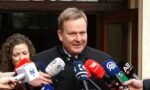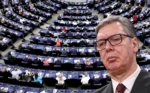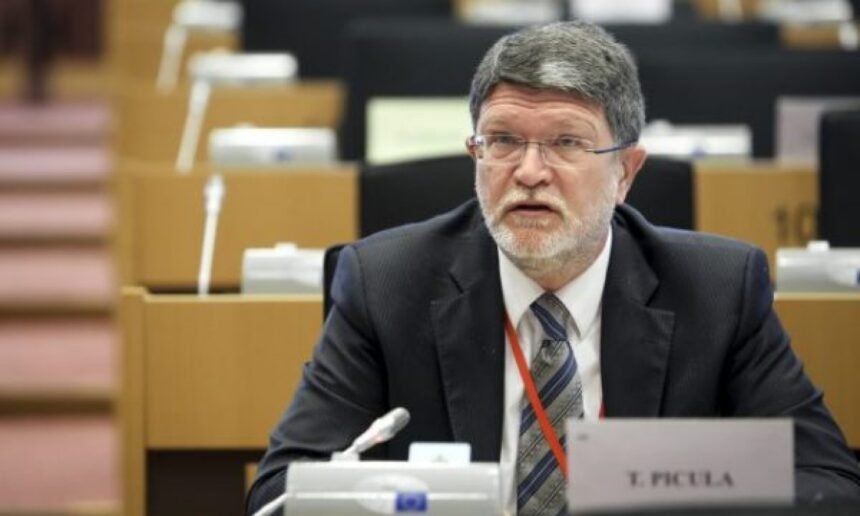
Tonino Picula, the European Parliament rapporteur for Serbia, responded to statements made by Serbian President Aleksandar Vučić, who claimed that Serbia does not wish to meet with the European Parliament (EP) delegation because they were coming to Belgrade “uninvited.”
Speaking to the television station Nova, Picula clarified that it is not true that the EP delegation arrived without notice. He explained that the Serbian Embassy in Brussels had been informed in advance and that the EU delegation in Belgrade had contributed to organizing the program.
“It is standard practice and there is nothing unusual here, aside from this reaction by the government and the situation in the country. The main purpose of our delegation, which is composed of representatives from various parties in the European Parliament, is to have a direct conversation with those who reflect the sentiments of Serbian citizens, in order to gain a fuller understanding of the country and events over the past year. Why the authorities chose to boycott in this way, I would say, relates to avoiding engagement with those who are key to determining Serbia’s accession to the European Union,” Picula said.
He added that the accession document between the EU and Serbia, like for any candidate country, must undergo European Parliament review, making this meeting important.
“I believe this is a missed opportunity for those most responsible in Serbia at such a crucial stage of the process, when they should have been hearing what we think about the candidate country,” Picula emphasized.
He further explained why this visit is significant from a European perspective:
“We want to do our work correctly; many things can be learned from reports, but direct dialogue cannot be replaced, especially when it comes to Members of the European Parliament.”
When asked whether the EU today demands more from Serbia than from other candidate countries, Picula responded that it cannot be described as an unfair approach toward a candidate country.
“The only thing that has changed in recent years is the accession negotiation methodology and the geopolitical circumstances. Serbia agreed to the first, while the second involves a situation that can be called neglect, because progress in negotiations cannot be expected while key elements of the EU’s Common Foreign and Security Policy are ignored, relations with neighboring countries in conflict are maintained, electoral reforms are neglected, or media freedoms are restricted. Therefore, it is not a matter of unfair treatment, but of expectations Serbia has agreed to,” he explained.
According to Picula, avoiding direct dialogue is not a new situation.
“This is new for most of my colleagues who are with me on this delegation. I have faced this type of boycott before, but this time the message carries added weight because it involves refusal to engage with representatives of the European People’s Party, of which the ruling party in Serbia is indirectly part. So this is a message more for them than for me,” he said.
It should be noted that Serbian Parliament Speaker Ana Brnabić also stated that the EP delegation was coming without an invitation and that she would not meet with them, as she would be in Estonia at the time.
The European Parliament mission will be in Belgrade from 22 to 24 January, while Vučić will be attending the World Economic Forum in Davos.