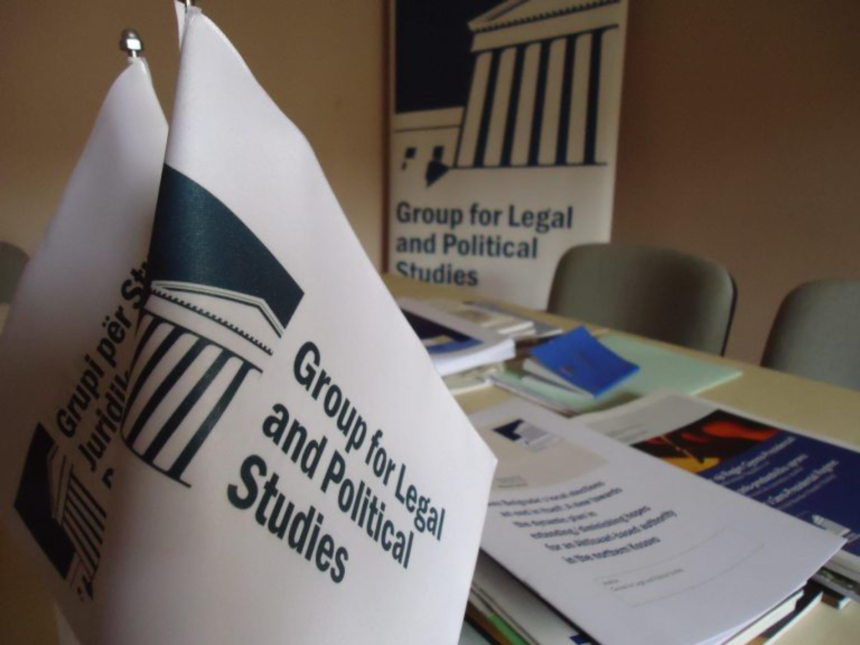
The Group for Legal and Political Studies (GLPS) has called for broader political consensus on key integration issues, warning that the political deadlock that has characterized Kosovo since the February elections has caused major consequences for economic development and the country’s international credibility.
They emphasized that beyond internal party agendas, Kosovo needs wider dialogue and cooperation on essential issues such as the dialogue with Serbia, progress toward membership in the Council of Europe, and the application for EU candidate status.
GLPS Executive Director Njomza Arifi said that delays in forming institutions and ongoing political instability have jeopardized the use of economic growth funds, threatening over €800 million that Kosovo could have benefited from.
She stated that the political stalemate has harmed both domestic and international processes, especially reforms required for Kosovo’s advancement. Arifi highlighted that Kosovo risks substantial delays in the Growth Plan if stable institutions are not formed.
She also noted that the political deadlock has affected World Bank funds and other development projects that remain unapproved due to institutional delays.
According to Arifi, Kosovo has lost an entire year in terms of reforms essential for EU integration, including public administration reforms, rule of law improvements, and democratic development.
Regarding the upcoming early elections on December 28, Arifi stressed that political stability is crucial for economic progress and integration processes. She urged the political spectrum to reach a consensus on issues that go beyond party interests, such as Council of Europe membership, the dialogue with Serbia, and Kosovo’s stalled EU candidate application.
Kosovo will head to parliamentary elections for the second time this year on December 28, following the failure to form institutions after the February 2025 elections.