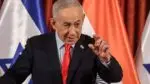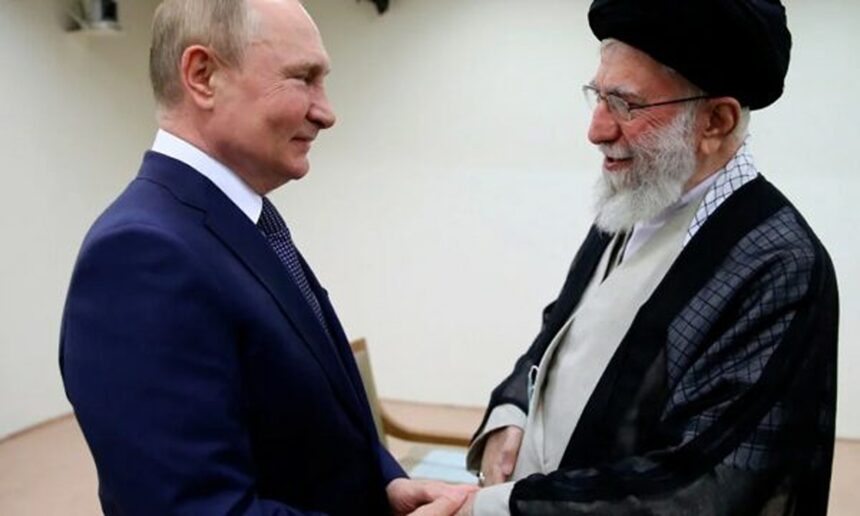
The reported targeted killing of Iran’s Supreme Leader Ali Khamenei in an Israeli-led strike backed by the United States has reignited deep-seated fears within the Kremlin, according to an analysis by Politico.
Less than nine months ago, when asked how he would react if Khamenei were killed in an attack, Vladimir Putin declined to comment. Now, following the strike, the Russian president has publicly condemned the killing, calling it a “murder carried out in cynical violation of all norms of human morality and international law,” according to a statement published on the Kremlin’s website.
Notably, Putin did not explicitly name the countries behind the operation.
Echoes of Gaddafi
Within Russian political circles, comparisons quickly emerged with the 2011 fall of Libyan leader Muammar Gaddafi following NATO intervention.
Footage of Gaddafi’s violent death reportedly left Putin visibly shaken at the time. Analysts argue that the event marked a turning point in Russian foreign and domestic policy, reinforcing Putin’s distrust of the West and deepening his determination to prevent regime change in Russia.
Alexander Baunov of the Carnegie Russia–Eurasia Center has previously described Gaddafi’s death as a defining moment that reshaped Moscow’s worldview, viewing Western intervention as the “ultimate betrayal.”
Growing Paranoia and Isolation
Over the years, Putin has become increasingly isolated. During the COVID-19 pandemic, foreign leaders and Russian officials were required to sit meters away from him. Public appearances remain highly choreographed.
Late opposition leader Alexei Navalny famously referred to him as a “grandfather in a bunker,” alluding to investigations into a luxury palace allegedly linked to Putin.
The rapid downfall of allies such as Khamenei and Venezuela’s Nicolás Maduro has fueled anxiety among pro-Kremlin commentators. Former Russian president Dmitry Medvedev accused Washington of revealing its “true colors,” while nationalist ideologue Alexander Dugin warned that Russia could be next.
Some Russian commentators openly questioned whether U.S.-mediated peace talks with Ukraine could mask broader strategic intentions.
Pragmatism Over Emotion
Despite the rhetoric, the Kremlin’s official tone has remained measured. Presidential spokesman Dmitry Peskov expressed disappointment over failed U.S.–Iran talks while also acknowledging U.S. mediation efforts in Ukraine.
Analysts suggest that Putin is unlikely to allow emotions over Iran to derail his primary objective: securing victory in Ukraine. Sam Greene of King’s College London argues that Trump’s pressure on Kyiv and European allies has been one of Moscow’s strongest geopolitical advantages.
At the same time, Russia may see strategic benefits in the Iran crisis, including potentially higher oil prices and a distracted Washington.
The Nuclear Deterrent — and Internal Risks
Unlike Gaddafi or Khamenei, Putin controls the world’s largest nuclear arsenal — a powerful deterrent against external threats.
However, analysts note that nuclear weapons offer no protection against internal political risks. History shows that long-ruling authoritarian leaders often leave power in one of two ways: through arrest or death.
While Putin’s public posture remains firm, the events surrounding Khamenei’s killing may have sharpened concerns within the Kremlin about regime security and political survival.